
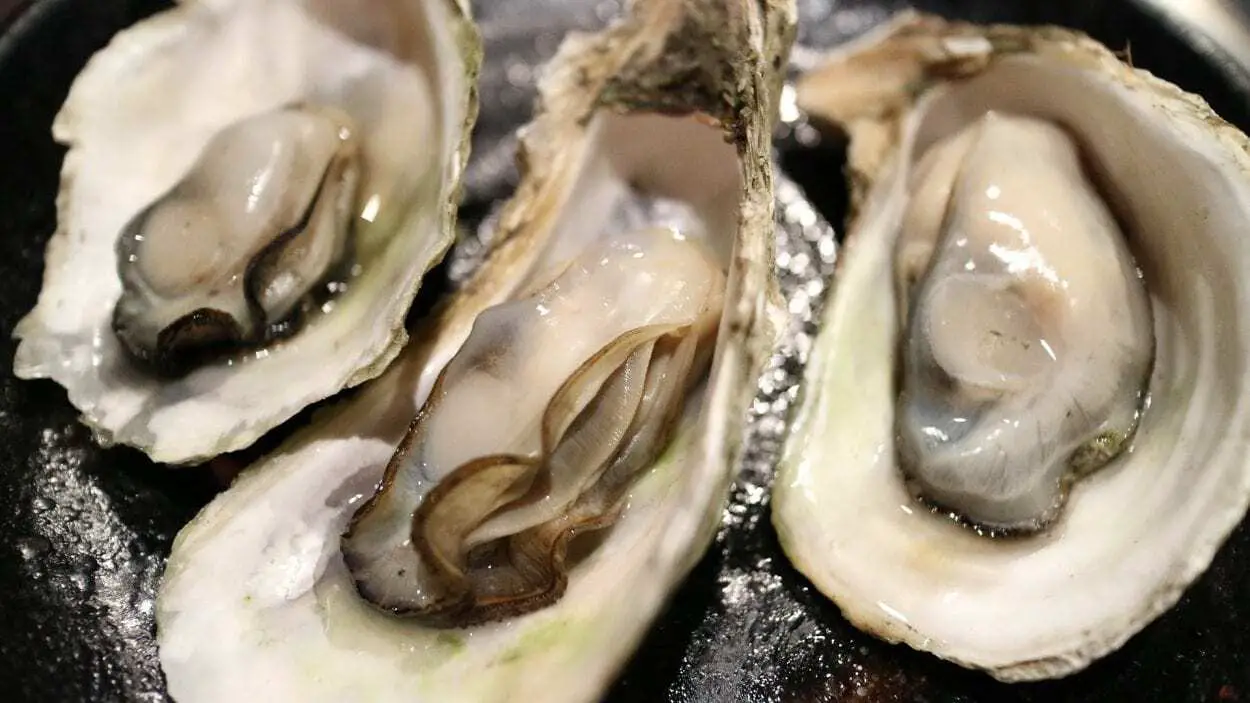
An interdisciplinary team of scientists studying thousands of oyster shells along the Georgia coast, some as old as 4,500 years, has published new insights into how Native Americans sustained oyster harvests for thousands of years, observations that may lead to better management practices of oyster reefs today.
Their study, led by University of Georgia archaeologist Victor Thompson, was published July 10 in the journal Science Advances.
The new research argues that understanding the long-term stability of coastal ecosystems requires documenting past and present conditions of such environments, as well as considering their future. The findings highlight a remarkable stability of oyster reefs prior to the 20th century and have implications for oyster-reef restoration by serving as a guide for the selection of suitable oyster restoration sites in the future.
Shellfish, such as oysters, have long been a food staple for human populations around the world, including Native American communities along the coast of the southeastern United States. The eastern oyster Crassostrea virginica is a species studied frequently by biologists and marine ecologists because of the central role the species plays in coastal ecosystems.
Oyster reefs are a keystone species that provide critical habitats for other estuarine organisms. Oyster populations, however, have dramatically declined worldwide over the last 100 years due to overexploitation, climate change and habitat degradation.
“Oyster reefs were an integral part of the Native American landscape and our study shows that their sustainability over long periods of time was likely due to the sophisticated cultural systems that governed harvesting practices,” said Thompson, professor of anthropology in the Franklin College of Arts and Sciences and director of the UGA Laboratory of Archaeology.
According to Thompson, prior models used by archaeologists have not adequately accounted for the role Indigenous people had not only sustaining ecosystems, but also enhancing biodiversity.
“Our research shows that harvesting was done likely with an aim towards sustainability by Native American communities,” he said. “Work here along the Georgia coast, along with colleagues working in the Pacific and in Amazonia, indicates that Indigenous peoples had a wealth of traditional ecological knowledge regarding these landscapes and actively managed them for thousands of years.”
Changes in oyster shell size and abundance is widely used to examine human population pressures and the health of oyster reefs. The researchers measured nearly 40,000 oyster shells from 15 Late Archaic (4500 – 3500 years Before Present) through Mississippian (1150 – 370 years BP) period archaeological sites situated along the South Atlantic coast of the United States to provide a long-term record of oyster harvesting practices and to document oyster abundance and size across time.
The new findings show an increase in oyster size throughout time and a nonrandom pattern in their distributions across archaeological sites up and down the coastline that the authors believe is related to the varying environmental conditions found in different areas.
When the researchers compared their work to maps of the 19th-century oyster reef distributions, they found that the two were highly correlated. All of the data on oyster size and reef size suggested there was considerable stability in oyster productivity over time, even if some reefs were not quite as productive as others. This overall productivity changed, however, in the early 1900s when industrial oyster canning devastated the reefs, leaving only a small percent of the reefs viable today.
“This work, which was partially supported by the Georgia Coastal Ecosystems Long Term Ecological Research project, demonstrates the importance of understanding the role that humans play in shaping the landscape, and that is something that is not always appreciated in ecological studies,” said Merryl Alber, professor and director of the UGA Marine Institute on Sapelo Island, a site of excavations for this study.
Header Image Credit – Public Domain




