
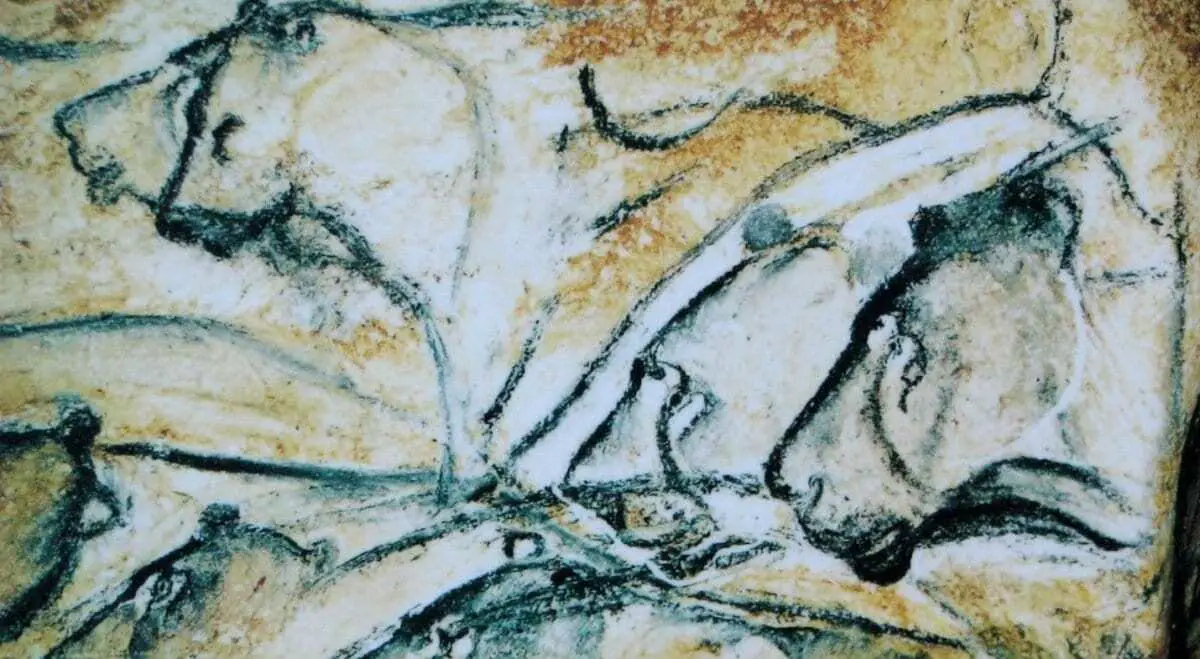
Neanderthals had large brains and made complex tools but never demonstrated the ability to draw recognizable images, unlike early modern humans who created vivid renderings of animals and other figures on rocks and cave walls.
That artistic gap may be due to differences in the way they hunted, suggests a University of California, Davis, expert on predator-prey relations and their impacts on the evolution of behavior.
Neanderthals used thrusting spears to bring down tamer prey in Eurasia, while Homo sapiens, or modern humans, spent hundreds of thousands of years spear-hunting wary and dangerous game on the open grasslands of Africa.
Richard Coss, a professor emeritus of psychology, says the hand-eye coordination involved in both hunting with throwing spears and drawing representational art could be one factor explaining why modern humans became smarter than Neanderthals.
In an article recently published in the journal Evolutionary Studies in Imaginative Culture, Coss examines archaeological evidence, genomics, neuroscience studies, animal behavior and prehistoric cave art.
New theory of evolution
From this, he proposes a new theory for the evolution of the human brain: Homo sapiensdeveloped rounder skulls and grew bigger parietal cortexes — the region of the brain that integrates visual imagery and motor coordination — because of an evolutionary arms race with increasingly wary prey.
Early humans hunted with throwing spears in sub-Saharan Africa for more than 500,000 years — leading their increasingly watchful prey to develop better flight or fight survival strategies, Coss said.
Some anthropologists have suggested that throwing spears from a safe distance made hunting large game less dangerous, he said. But until now, “No explanation has been given for why large animals, such as hippos and Cape buffalo, are so dangerous to humans,” he said. “Other nonthreatening species foraging near these animals do not trigger alert or aggressive behavior like humans do.”
Drawn from earlier research on zebras
Coss’ paper grew out of a 2015 study in which he and a former graduate student reported that zebras living near human settlements could not be approached as closely before fleeing as wild horses when they saw a human approaching on foot — staying just outside the effective range of poisoned arrows used by African hunters for at least 24,000 years.
Neanderthals, whose ancestors left Africa for Eurasia before modern human ancestors, used thrusting spears at close range to kill horses, reindeer, bison, and other large game that had not developed an innate wariness of humans, he said.
Hunting relates to drawing
“Neanderthals could mentally visualize previously seen animals from working memory, but they were unable to translate those mental images effectively into the coordinated hand-movement patterns required for drawing,” Coss writes.
Coss, who taught drawing classes early in his academic career and whose previous research focused on art and human evolution, used photos and film to study the strokes of charcoal drawings and engravings of animals made by human artists 28,000 to 32,000 years ago in the Chauvet-Pont-d’Arc Cave in southern France.
The visual imagery employed in drawing regulates arm movements in a manner similar to how hunters visualize the arc their spears must make to hit their animal targets, he concludes.
These drawings could have acted as teaching tools. “Since the act of drawing enhances observational skills, perhaps these drawings were useful for conceptualizing hunts, evaluating game attentiveness, selecting vulnerable body areas as targets, and fostering group cohesiveness via spiritual ceremonies,” he writes.
As a result, the advent of drawing may have set the stage for cultural changes, Coss said. “There are enormous social implications in this ability to share mental images with group members.”
UNIVERSITY OF CALIFORNIA – DAVIS
Header Image: Replica of drawing of lions painted in the Chauvet Cave. Art in the cave has been identified as created by early modern humans. Credit : Public Domain




