Date:

Last Gasp to Save Sekhemka

The Save the Sekhemka campaign has issued the following press release and statement, urging Prime Minister David Cameron to intervene:


- Advertisement -

A joint appeal to Prime Minster David Cameron from the UK and Egyptian Campaigns to Save Sekhemka.

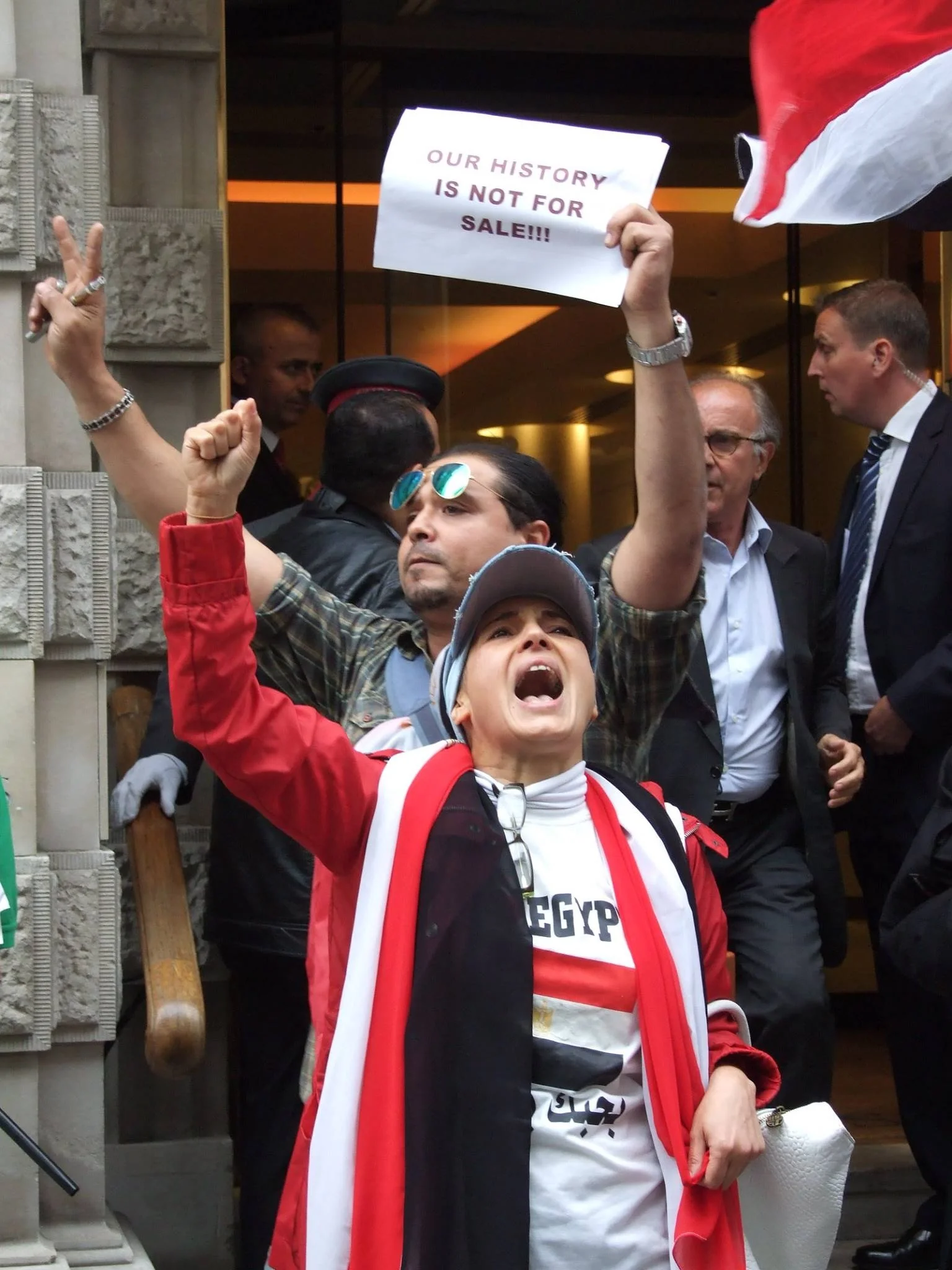
On 10 July 2014 the statue of the Ancient Egyptian civil servant Sekhemka, one of the jewels of Egyptian and World Art was sold to an anonymous buyer at Christie’s in London for £15.76 million.  The sale of this irreplaceable part of the museum collection held in care for the public by Northampton Council was opposed by the Arts Council, the Museums Association, the Art Fund, and the International Council of Museums, as well as local people in Northampton .

In just two days, on July 29 2015, a temporary export ban, placed on the statue by Culture Minister Ed Vaizey, will expire and the buyer will be free to obtain an export licence and send Sekhemka anywhere in the world, possibly never to be seen in public again.
Creative Commons Attributable Non Commercial licence

One of the principal reason for the international opposition to the sale was the increasing evidence that such sales benefit no-one except the international auction houses who see their profits increase and international terrorists and criminal gangs who in part fund their activities by trafficking and selling art and archaeological artifacts like the statue of Sekhemka.  If auction house prices rise, so do the profits of the criminal and terrorist traffickers and forgers.

- Advertisement -

However, it is still not too late for you to turn Britain’s shame in being party to such an unethical sale into pride at Britain working with the Egyptian people to make amends for this indelible stain on Britain’s cultural reputation.

We are asking you to make an urgent public intervention with Christie’s and the buyer of the Sekhemka statue and ask the Department for Culture, Media and Sport to broker a binding agreement whereby the statue remains in the UK on free public display in a British museum.

We are also asking you to make clear that you deplore the sale of publicly held museum collections for profit in a way which can only drive up the prices and the rewards for such unethical behaviour.

The only thing preventing such an intervention is the apparent unwillingness of the British Government to be seen to do the right thing.  While your intervention will not just preserve a beautiful and uniquely evocative example of Egypt’s ancient art and culture for the public and visitors to Britain to enjoy.

It will send a message that Britain cares about the cultural jewels it has in its care and will not in future allow them to be exploited for short term gain in a way which only encourages criminals, traffickers and terrorists to set out to loot and to sell still more of the irreplaceable culture we share.
Follow the campaign on facebook : Click Here

- Advertisement -

Stay Updated: Follow us on iOS, Android, Google News, Facebook, Instagram, Twitter, Threads, TikTok, LinkedIn, and our newsletter

spot_img
Mark Milligan
Mark Milligan
Mark Milligan is a multi-award-winning journalist and the Managing Editor at HeritageDaily. His background is in archaeology and computer science, having written over 8,000 articles across several online publications. Mark is a member of the Association of British Science Writers (ABSW), the World Federation of Science Journalists, and in 2023 was the recipient of the British Citizen Award for Education, the BCA Medal of Honour, and the UK Prime Minister's Points of Light Award.
spot_img
spot_img

Mobile Application

spot_img

Related Articles

Early Roman marching camps confirm 3rd century advances in Germania

Archaeological investigations have led to the identification of the first confirmed Roman marching camps in the federal state of Saxony-Anhalt, providing the earliest structural evidence that Roman military units advanced into the interior of Germania as far as the Elbe River.

Submerged remains found at El Huarco Archaeological Complex

The Ministry of Culture has initiated a new research campaign in the marine area surrounding the El Huarco Archaeological Complex, a significant coastal heritage site located in the district of Cerro Azul, Cañete province, south of Lima.

Archaeologists uncover traces of Victorian school life

It’s rare for archaeologists to discover objects we can directly link to children, so a team from MOLA (Museum of London Archaeology) was delighted to uncover evidence of Victorian children’s schoolwork and play during recent excavations ahead of the development of SEGRO Park Wapping.

Rare 5th-century BC bone stylus discovered in Gela excavation

Archaeologists working in the Orto Fontanelle area of Gela have uncovered a remarkably rare and perfectly preserved bone ceramist’s stylus, a find being hailed as one of exceptional historical and archaeological value.

Nationally significant Anglo-Saxon burial ground uncovered at Sizewell C

Archaeologists have uncovered a nationally significant Anglo-Saxon burial ground during preparatory works for the Sizewell C nuclear power station in Suffolk.

Inscriptions reveal the lives behind the ancient temples of the Middle East

Stone temples rising from the deserts of the ancient Near East were meant to embody the power of the gods.

World’s oldest poison arrows discovered

Even in the deep Stone Age, humans possessed biochemical knowledge that appears extraordinary by modern standards.

Tang Dynasty noblewoman buried with gold hair ornaments

Archaeologists in northwest China have identified an elaborately furnished tomb belonging to a young Tang Dynasty noblewoman, providing significant evidence for the extent of China’s engagement with trans-Eurasian exchange networks during the late seventh century.