
Date:

Avar period discovery could rewrite Hungarian history

The construction of an electric vehicle plant in Szeged has led to the discovery of an extensive Avar-period archaeological complex.

Specialists at the Hungarian National Museum Public Collection Centre and Móra Ferenc Museum are working on the excavation, with preliminary surveys identifying twelve archaeological sites within the project area, half of which were previously unknown.

- Advertisement -

One of these locations was found to contain a complete early Avar cemetery, which experts are hailing as opening a new era in the study of the early medieval Carpathian Basin.

Tibor Sztankovánszki, an archaeologist at the Móra Ferenc Museum, said the cemetery’s unusually good preservation makes it unique.

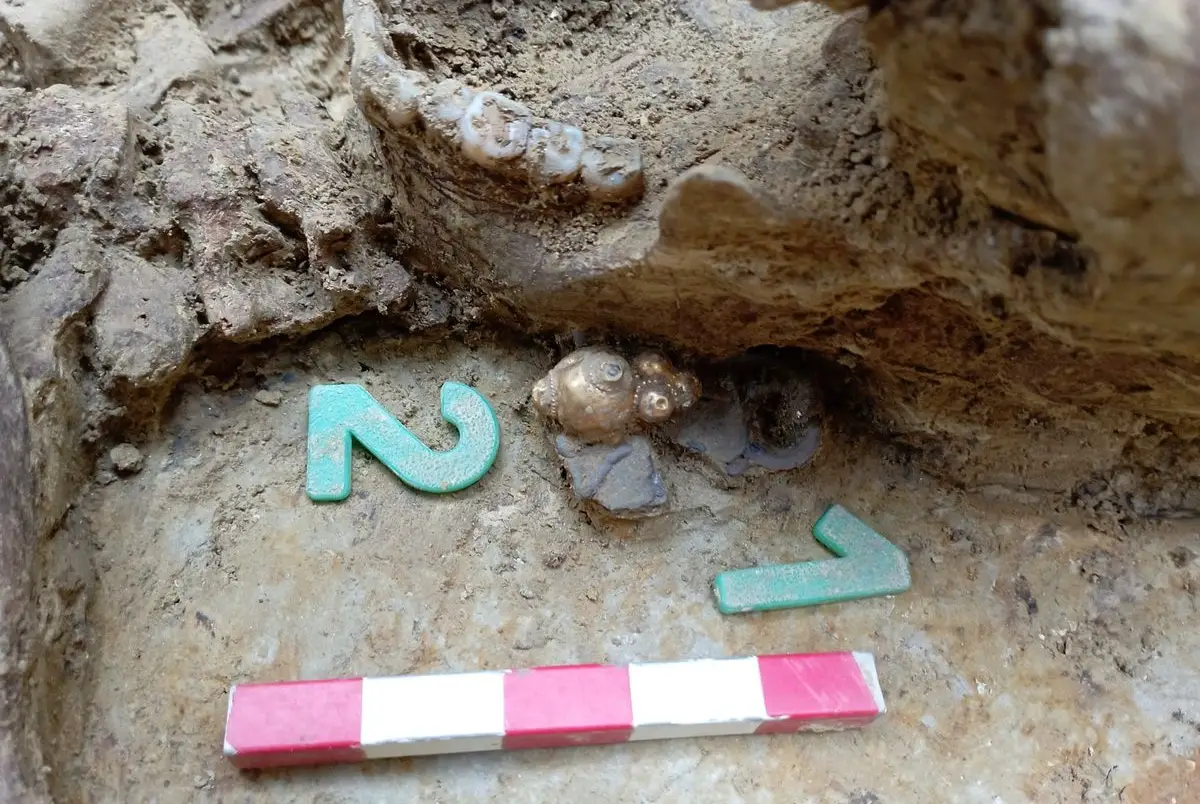
Women’s graves contained gold and silver jewellery, including finely crafted granulated earrings, bead necklaces, and decorated belts. Men were buried with weapons such as swords, bows, and spears, and several graves contained horse remains, reflecting the Avars’ martial and equestrian culture.

One warrior’s skull shows clear evidence of battle trauma, offering rare physical testimony to armed conflict during the period. Several Byzantine objects further suggest connections to the wars between the Avar Khaganate and the Byzantine Empire.

- Advertisement -

One of the greatest significances of the excavation is that the cemetery was completely demarcated. Because of this, the entire population of the community that lived here can be examined, which is a rare opportunity in researching the period of migration.

Archaeological work in the area is ongoing. Additional isolated warrior burials have been identified, and further discoveries are expected during planned infrastructure expansions, including work along Highway 5. Researchers agree that the Szeged BYD project will continue to reshape understanding of the Avar period for years to come and rewrite Hungarian history.

Header Image Credit : Ferenc Móra Museum

Sources : szegedma

- Advertisement -

Stay Updated: Follow us on iOS, Android, Google News, Facebook, Instagram, Twitter, Threads, TikTok, LinkedIn, and our newsletter

spot_img
Mark Milligan
Mark Milligan
Mark Milligan is a multi-award-winning journalist and the Managing Editor at HeritageDaily. His background is in archaeology and computer science, having written over 8,000 articles across several online publications. Mark is a member of the Association of British Science Writers (ABSW), the World Federation of Science Journalists, and in 2023 was the recipient of the British Citizen Award for Education, the BCA Medal of Honour, and the UK Prime Minister's Points of Light Award.
spot_img
spot_img

Mobile Application

spot_img

Related Articles

High-status Bronze Age tombs excavated in Hala Sultan Tekke

Excavations in Hala Sultan Tekke have revealed two ancient chamber tombs containing high-status grave goods.

Mysterious tunnel found in Neolithic ditch enclosure

Archaeologists from the State Office for Heritage Management and Archaeology (LDA) have unearthed a mysterious tunnel within a Neolithic ditch enclosure near Reinstedt. Germany. 

Cross of Saint George discovered in Polish forest

An authorised metal detectorist has made the rare discovery of a St. George’s Cross in the Chełm State Forests in eastern Poland.

Excavations rewrite Cambridge’s riverside history

Excavations at Trumpington Meadows, on the southern end of Cambridge, have documented a multifaceted chronology of human life from the early Neolithic to the Anglo-Saxon period.

Pre-Hispanic funerary remains uncovered in Oaxaca

The National Institute of Anthropology and History (INAH), together with the Ministry of Culture of the Government of Mexico and the INAH Oaxaca Center, has confirmed the discovery of significant archaeological remains in the municipality of San Pedro Jaltepetongo, in the state of Oaxaca.

Bronze reliquary cross unearthed in ancient Lystra

A rare bronze reliquary cross has been discovered during excavations of a church complex in the ancient city of Lystra, located in the Meram district of Konya, central Türkiye.

Discovery of monumental sacred lake at Karnak

Recent archaeological investigations at the Karnak temple complex in Luxor, Egypt, have revealed a previously unknown sacred lake.

Preserved hilltop settlement provides rare insight into Bronze Age life

Archaeologists have uncovered a preserved hilltop settlement following a major excavation at Harden Quarry in the Cheviot Hills straddling the Anglo-Scottish border.