
Date:

Archaeologists uncover Imperial Hittite archive

Archaeologists from Koç University have uncovered an Imperial Hittite archive from the reign of Ḫattušili III during excavations at Kayalıpınar, located in the Yıldızeli District of Turkey’s Sivas Province.

Kayalıpınar is a multi-period site, with evidence of early occupation beginning in the 5th millennium BC. During the early kārum period, Kayalıpınar became a station (wabartum) of ancient Assyrian traders, that eventually developed into a trading colony (kārum).

- Advertisement -

In the Early Bronze Age, the Hittites redeveloped the colony into a major city called Šamuḫa, serving as a base of field operations, and a centre for the worship of the Hurrian Goddess of the Night.

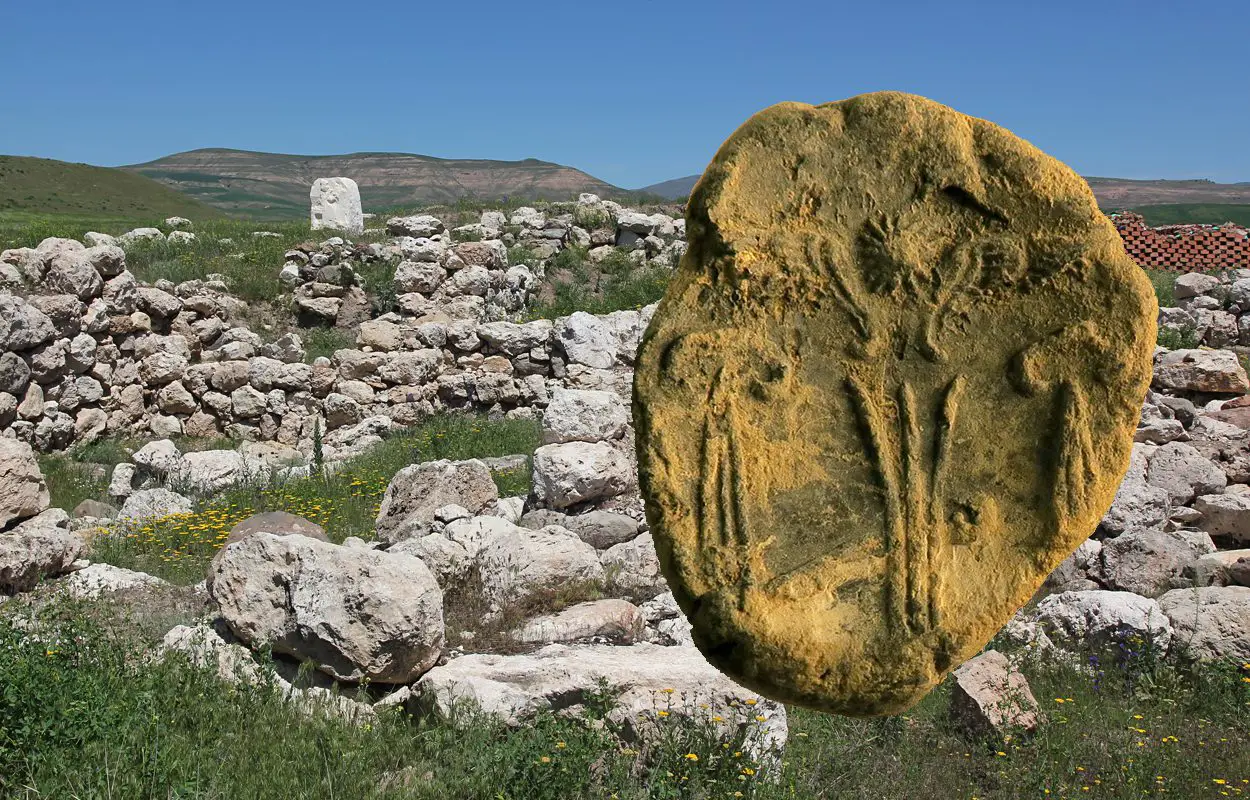
Recent excavations by Koç University have uncovered clay stamped seals belonging to Ḫattušili III, a ruler of the Hittite Empire during the 13th century BC.

Ḫattušili III is most known for his treaty known as the Eternal Treaty or the Silver Treaty with the Egyptian Pharaoh Ramesses II. The treaty was signed to end a long war between the Hittite Empire and the Egyptians, who had fought for over two centuries to gain dominance over the lands of the eastern Mediterranean.

Excavations have also found seals belonging to Puduhepa (wife of Ḫattušili III), as well as seals for his children and other members of the Royal family. Also uncovered are fragments of tablets with cuneiform inscriptions of festival and fortune-telling texts, in addition to numerous religious texts. According to the researchers, the seals were found in a building that can only be described as an Imperial archive of the Hittites.

- Advertisement -

During this seasons study, the researchers also excavated two new Hittite structures. Speaking to AA, Dr Maner said: “We think they could be temples based on the plan and the finds. We even found the name of Ḫattušili III engraved on a ceramic vessel in one building.”

Header Image Credit : Ingeborg Simon – CC BY-SA 3.0

- Advertisement -

Stay Updated: Follow us on iOS, Android, Google News, Facebook, Instagram, Twitter, Threads, TikTok, LinkedIn, and our newsletter

spot_img
Mark Milligan
Mark Milligan
Mark Milligan is a multi-award-winning journalist and the Managing Editor at HeritageDaily. His background is in archaeology and computer science, having written over 8,000 articles across several online publications. Mark is a member of the Association of British Science Writers (ABSW), the World Federation of Science Journalists, and in 2023 was the recipient of the British Citizen Award for Education, the BCA Medal of Honour, and the UK Prime Minister's Points of Light Award.
spot_img
spot_img

Mobile Application

spot_img

Related Articles

Melting ice reveals 6,000-year-old artefacts in Norwegian mountains

Melting ice in Norway’s highest mountains is revealing archaeological remains dating back as far as 6,000 years, providing new insights into prehistoric activity at high elevations.

Ice Age spearheads reveal how early Americans adapted to new landscapes

An analysis of around 500 stone spearheads has revealed how Ice Age hunter-gatherers adapted to unfamiliar landscapes in the Tennessee River Valley.

Pre-Hispanic frog pendants shed light on ancient Maya trade networks

Archaeologists in Mexico are studying a collection of pre-Hispanic shell pendants that could provide new insights into ancient Maya trade networks, ritual practices and technological knowledge.

Bronze hand cannon offers rare evidence of early Korean firearms

Archaeologists in South Korea have authenticated a bronze hand cannon dating to the late Goryeo or early Joseon period, providing rare evidence for the early development of firearms on the Korean Peninsula.

Evidence of 15th-century fortified windmill unearthed in Poland

More than 300 archaeological features discovered on Windmill Hill in Puck could include rare fortifications linked to the Thirteen Years’ War

10,500-year-old wooden structures discovered beneath German lake

Rare Mesolithic timbers found 20 metres underwater could reveal previously unknown construction by Stone Age hunter-gatherers

Ancient auroch skull found impaled on wooden stake

Unique discovery of an aurochs skull impaled on a wooden stake may be linked to one of northern Germany’s oldest known burials

Rare medieval heating system uncovered beneath former Swiss monastery

Archaeologists in Basel have uncovered an exceptionally rare medieval heating system hidden beneath the remains of a former monastery for centuries.


