
Date:

5,000‑year‑old tribal earth ovens found in Washington State

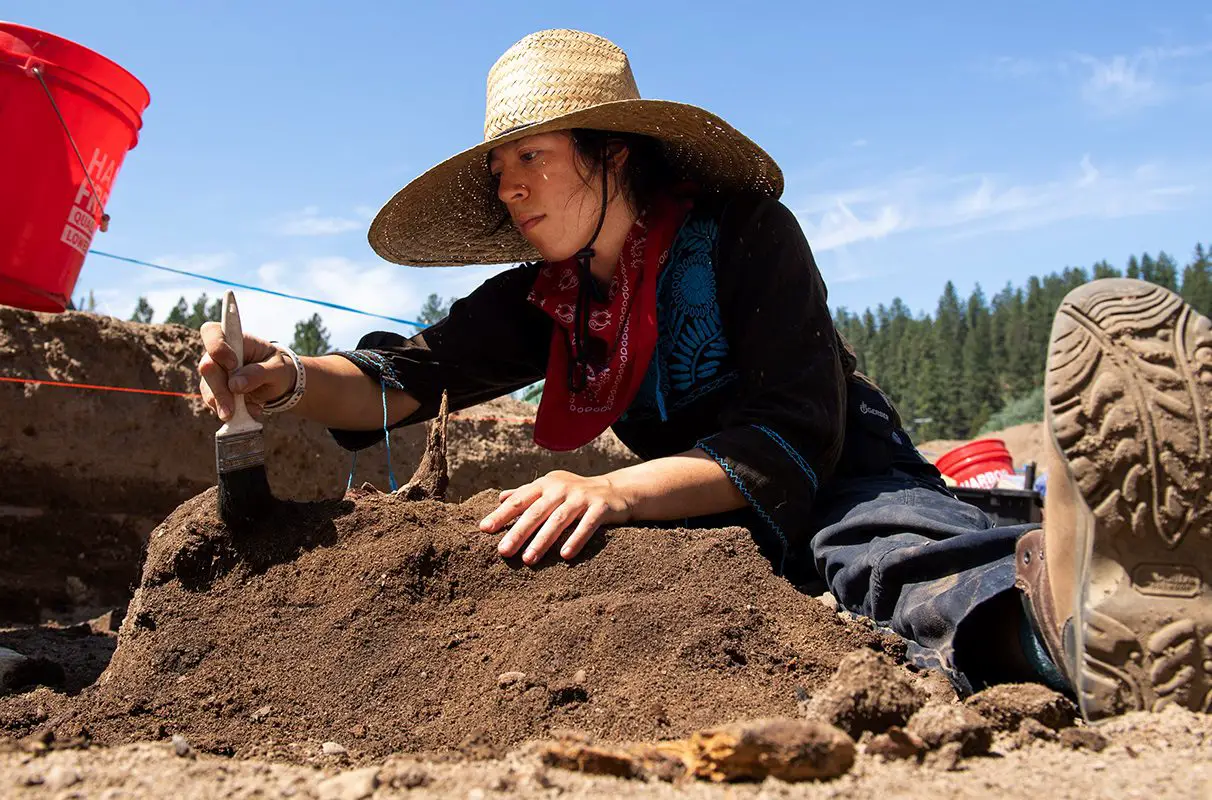
A joint project involving the Kalispel Tribe and archaeologists from Washington State University (WSU) has led to the discovery of 5,000‑year‑old earth ovens near Newport in Washington State, United States.

The ovens were found on land purchased by the Kalispel Tribe to accommodate for the construction of new housing near the tribal reservation.

- Advertisement -

A team of professional archaeologists and fourth-year students from WSU is currently working to delineate the features of the ovens and investigate any potential changes in their size and shape over time.

“As a Tribe, we’ve never shared this kind of historical excavation experience with the public,” said Kalispel Tribal elder Shirley Blackbear. “But I think it is important for non-Natives to learn and understand more about our Tribe. Our history and traditions are very rich and important to us. Cooking techniques have been passed down from generation to generation.”

Radiocarbon dating of the ovens suggests that they are 5,000‑years‑old, with the oven contents being sent to WSU labs in the hope of finding organic remains that might indicate the diet and food processing techniques of tribal ancestors living on the banks of the Pend Oreille River.

One of the main food types the researchers hope to learn more about is camas, a small flowering plant with roots that can be cooked fresh or ground into flour for baking over several days. While the Kalispel Tribe has preserved the tradition of baking camas bread by passing it down from generation to generation, not much is known about the oven technology they used before 3,000 years ago.

- Advertisement -

Professor Shannon Tushingham from WSU said: “Earth ovens have been excavated in this area before, but now in 2023 we have all these wonderful new technologies that give us the ability to better determine what types of food were being eaten and how they were prepared.”

Kalispel Tribe

Header Image Credit : WSU

- Advertisement -

Stay Updated: Follow us on iOS, Android, Google News, Facebook, Instagram, Twitter, Threads, TikTok, LinkedIn, and our newsletter

spot_img
Mark Milligan
Mark Milligan
Mark Milligan is a multi-award-winning journalist and the Managing Editor at HeritageDaily. His background is in archaeology and computer science, having written over 8,000 articles across several online publications. Mark is a member of the Association of British Science Writers (ABSW), the World Federation of Science Journalists, and in 2023 was the recipient of the British Citizen Award for Education, the BCA Medal of Honour, and the UK Prime Minister's Points of Light Award.
spot_img
spot_img

Mobile Application

spot_img

Related Articles

Archaic-Era tomb contains elaborate bronze diadem

Excavations by the Ephorate of Antiquities of Phthiotis and Evrytania have made the remarkable discovery of an Archaic-Era tomb containing the remains of a woman buried with an elaborate bronze diadem.

Archaeologists open 5,000-year-old Begazi–Dandibay tomb

Archaeologists in Kazakhstan have announced the discovery of an exceptionally well-preserved tomb attributed to the Begazi–Dandibay, a late Bronze Age culture known for constructing megalithic mausolea.

Receding waters reveals submerged ancient ruins

Receding waters at Lake Sapanca in Turkey have revealed an ancient structure with mosaic flooring.

Archaeologists stunned by treasure-laden Roman pyre burial

Archaeologists in southwestern France have uncovered a Roman pyre burial containing an assemblage of high-status grave goods, offering rare insights on the region’s Imperial-era elite.

Chasing History Expeditions – Collect moments, not just miles

Built on the belief that adventure should be empowering rather than intimidating, Chasing History Expeditions provides travellers with expertly crafted itineraries that prioritise meaningful discovery, cultural immersion, and seamless logistics.

Structure for observing celestial movements predates the Chankillo observatory

The Peruvian Ministry of Culture has announced the discovery of an early Andean structure that predates the Chankillo solar observatory – long regarded as the earliest known observatory in the Americas.

2,300-year-old fortified city discovered in Kashkadarya

Archaeologists from the Samarkand Institute in Kashkadarya, southern Uzbekistan, have announced a major discovery: the remains of a fortified city dating back 2,300 years.

Jewel “worthy of a duke” unearthed at Castle Kolno

Researchers from the Institute of Archaeology at the University of Wroclaw have unearthed a jewel “worthy of a duke” at Castle Kolno, located between the Stobrawa and Budkowiczanka rivers in Stare Kolnie, Poland.