
Date:

Ancient Egyptian figurines depicting Osiris found in Poland

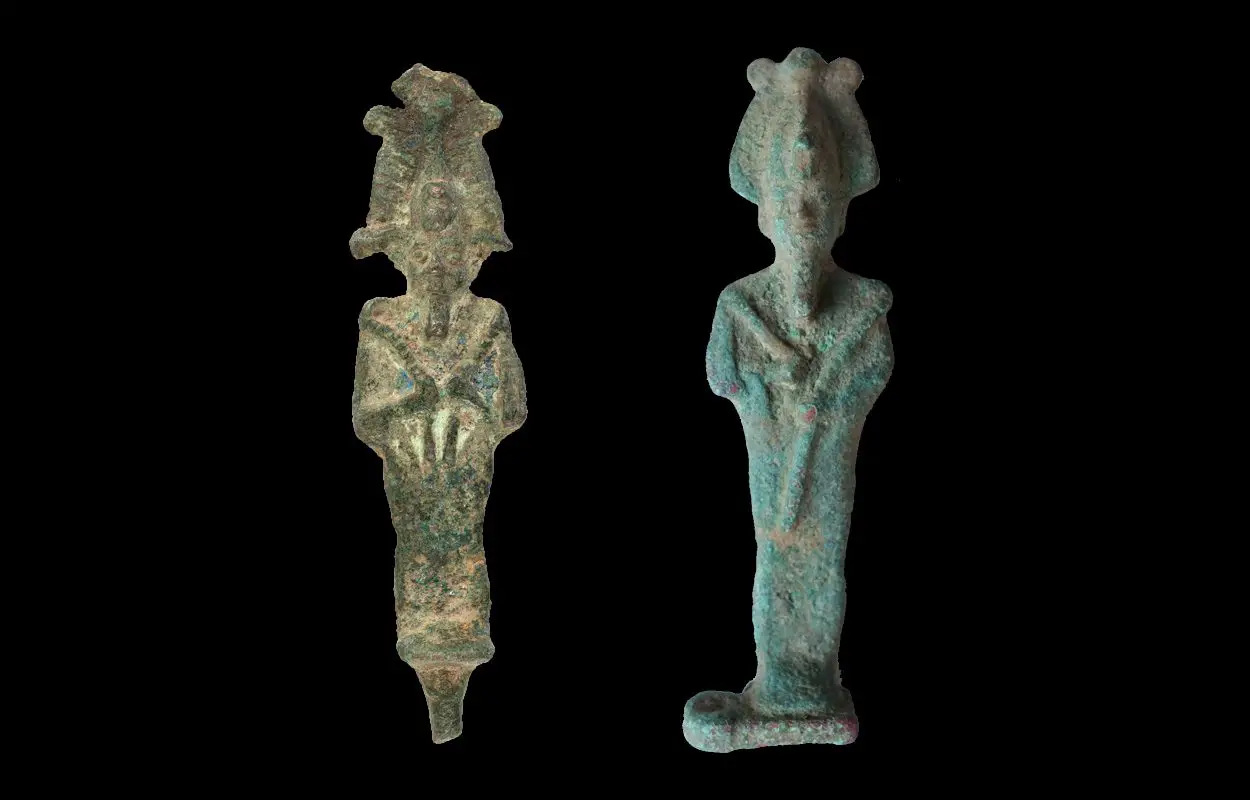
Archaeologists have discovered two Ancient Egyptian bronze figurines depicting Osiris during excavations in the village of Kluczkowice in Opole Lubelskie County, Poland.

The finds are part of a deposit which are believed to be from a collection owned by the Kleniewski family, who lived in the Palace of Kluczkowice until the German invasion of Poland during WW2.

- Advertisement -

According to diaries written by Maria Kleniewska, she describes visiting Egypt in 1904 and spending four months in Cairo and visiting Alexandria. What happened to Maria after the war is unknown, her husband died in WW1, whilst her son who inherited the estate was killed in WW2.

The researchers suggest that the family may have hidden the artefacts to safeguard them from the German SS in 1942, or just after the war when the palace furnishings and collections were looted and scattered.

Upon discovering the figurines, the Lubelskie Voivodship Conservator of Monuments (LWKZ), said: “The find is so unusual in our area and raised doubts about the authenticity”.

The artefacts were sent to the Voivodeship Office for the Protection of Monuments in Lublin for verification, which determined that the two figurines depicted Osiris, the god of fertility, agriculture, the afterlife, the dead, resurrection, life, and vegetation in ancient Egyptian religion.
- Advertisement -
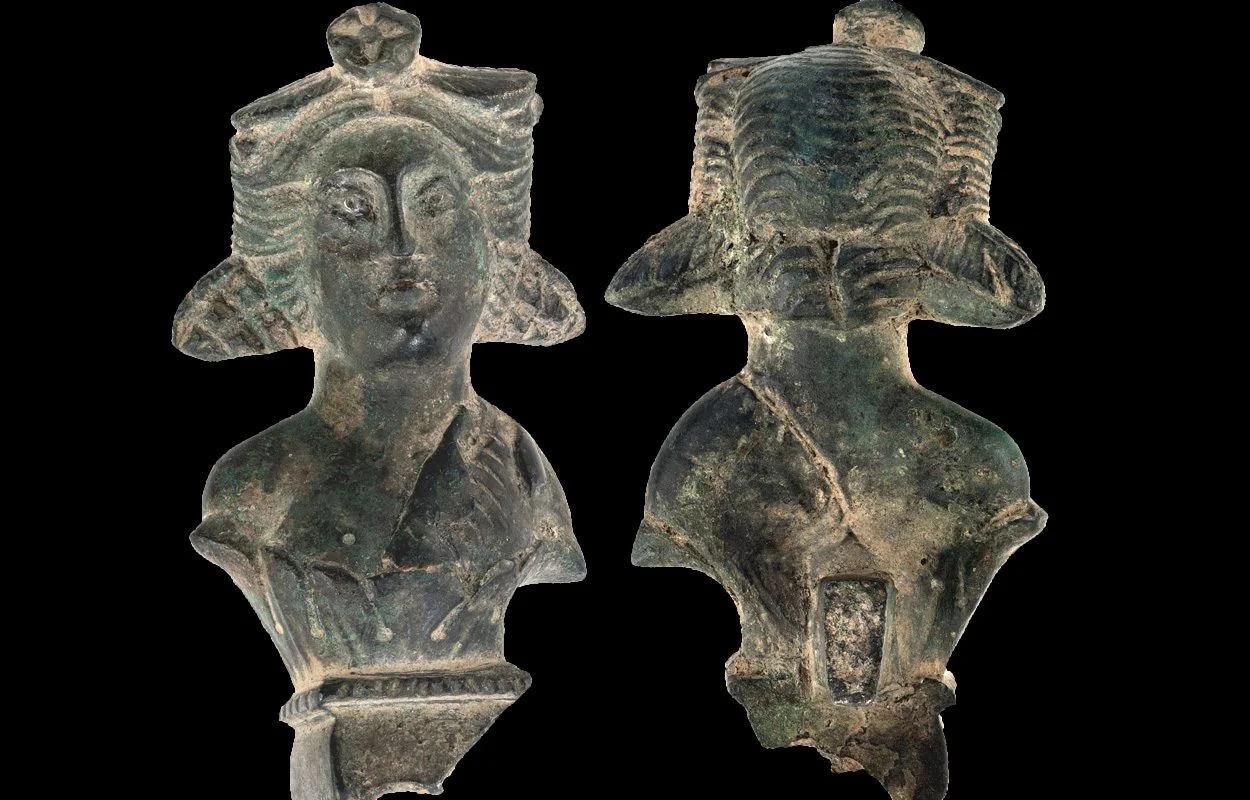
Figuring of Bacchus – Image Credit : Dr. Łukasz Miechowicz

A third figurine from the deposit was identified as depicting a bust of Bacchus, the Roman equivalent of Dionysus, associated with winemaking, orchards and fruit, vegetation, fertility, festivity, insanity, ritual madness, religious ecstasy, and theatre.

Working in cooperation with the National Museum in Lublin and the Department of Archaeology of the University of Warsaw, the Osiris figurines have been dated to the 1st millennium BC, while the bust of Bacchus has been dated to the 1st century AD and was likely part of a tripod, similar to an example found during the 18th century near Mount Vesuvius in Italy.
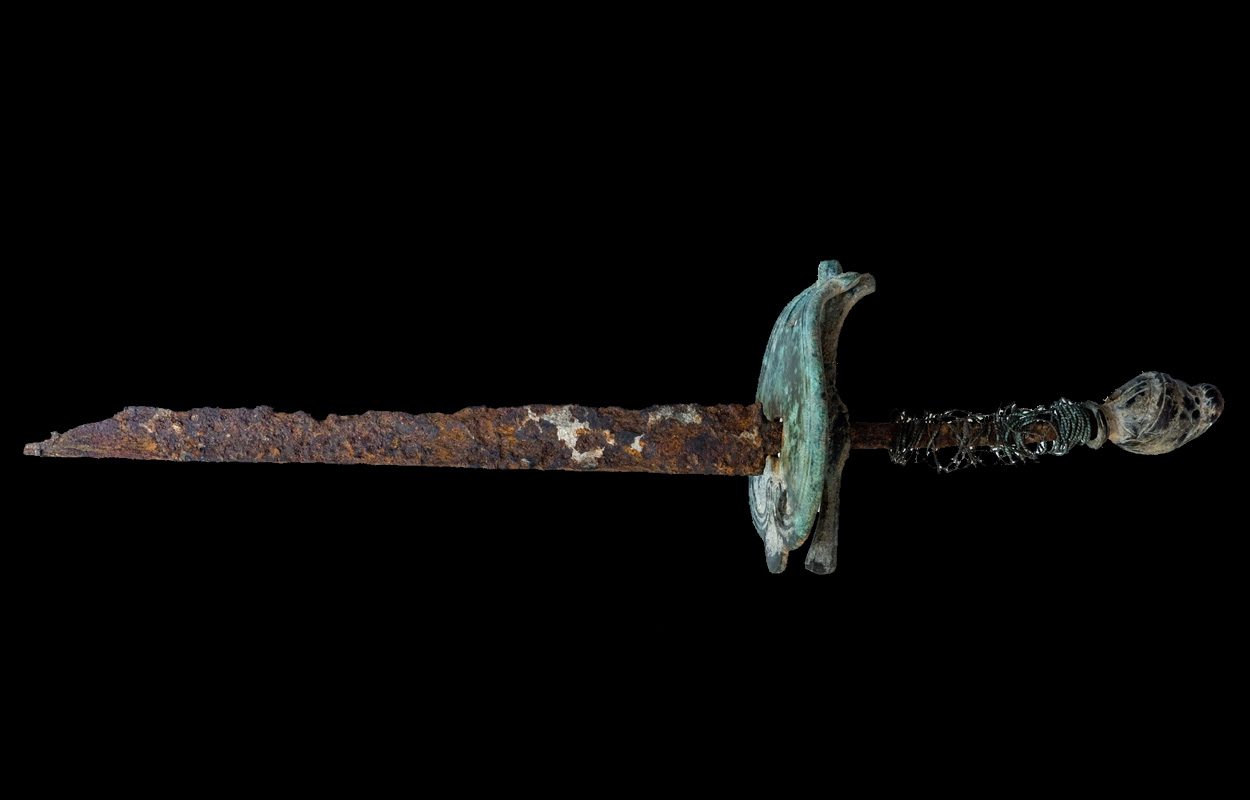
Image Credit : Dr. Łukasz Miechowicz

The researchers also discovered part of a richly decorated ceremonial sword from the 17th century, which may have been a colichemarde, a popular short sword that first appeared in 1680 and was popular in royal courts throughout Europe.

Speaking to Science in Poland, Dr. Łukasz Miechowicz, from the Institute of Archaeology and Ethnology of the Polish Academy of Sciences in Warsaw, said: “Finding part of a valuable collection that was lost many years ago is of great importance for science, cultural heritage, and the development of tourism”.

After further study, the artefacts will be transferred to be part of the collections in the National Museum in Lublin.

PAP

Header Image Credit : Dr. Łukasz Miechowicz

- Advertisement -

Stay Updated: Follow us on iOS, Android, Google News, Facebook, Instagram, Twitter, Threads, TikTok, LinkedIn, and our newsletter

spot_img
Mark Milligan
Mark Milligan
Mark Milligan is a multi-award-winning journalist and the Managing Editor at HeritageDaily. His background is in archaeology and computer science, having written over 8,000 articles across several online publications. Mark is a member of the Association of British Science Writers (ABSW), the World Federation of Science Journalists, and in 2023 was the recipient of the British Citizen Award for Education, the BCA Medal of Honour, and the UK Prime Minister's Points of Light Award.
spot_img
spot_img

Mobile Application

spot_img

Related Articles

Early Roman marching camps confirm 3rd century advances in Germania

Archaeological investigations have led to the identification of the first confirmed Roman marching camps in the federal state of Saxony-Anhalt, providing the earliest structural evidence that Roman military units advanced into the interior of Germania as far as the Elbe River.

Submerged remains found at El Huarco Archaeological Complex

The Ministry of Culture has initiated a new research campaign in the marine area surrounding the El Huarco Archaeological Complex, a significant coastal heritage site located in the district of Cerro Azul, Cañete province, south of Lima.

Archaeologists uncover traces of Victorian school life

It’s rare for archaeologists to discover objects we can directly link to children, so a team from MOLA (Museum of London Archaeology) was delighted to uncover evidence of Victorian children’s schoolwork and play during recent excavations ahead of the development of SEGRO Park Wapping.

Rare 5th-century BC bone stylus discovered in Gela excavation

Archaeologists working in the Orto Fontanelle area of Gela have uncovered a remarkably rare and perfectly preserved bone ceramist’s stylus, a find being hailed as one of exceptional historical and archaeological value.

Nationally significant Anglo-Saxon burial ground uncovered at Sizewell C

Archaeologists have uncovered a nationally significant Anglo-Saxon burial ground during preparatory works for the Sizewell C nuclear power station in Suffolk.

Inscriptions reveal the lives behind the ancient temples of the Middle East

Stone temples rising from the deserts of the ancient Near East were meant to embody the power of the gods.

World’s oldest poison arrows discovered

Even in the deep Stone Age, humans possessed biochemical knowledge that appears extraordinary by modern standards.

Tang Dynasty noblewoman buried with gold hair ornaments

Archaeologists in northwest China have identified an elaborately furnished tomb belonging to a young Tang Dynasty noblewoman, providing significant evidence for the extent of China’s engagement with trans-Eurasian exchange networks during the late seventh century.