Date:

HeritageDaily on iOS & Android

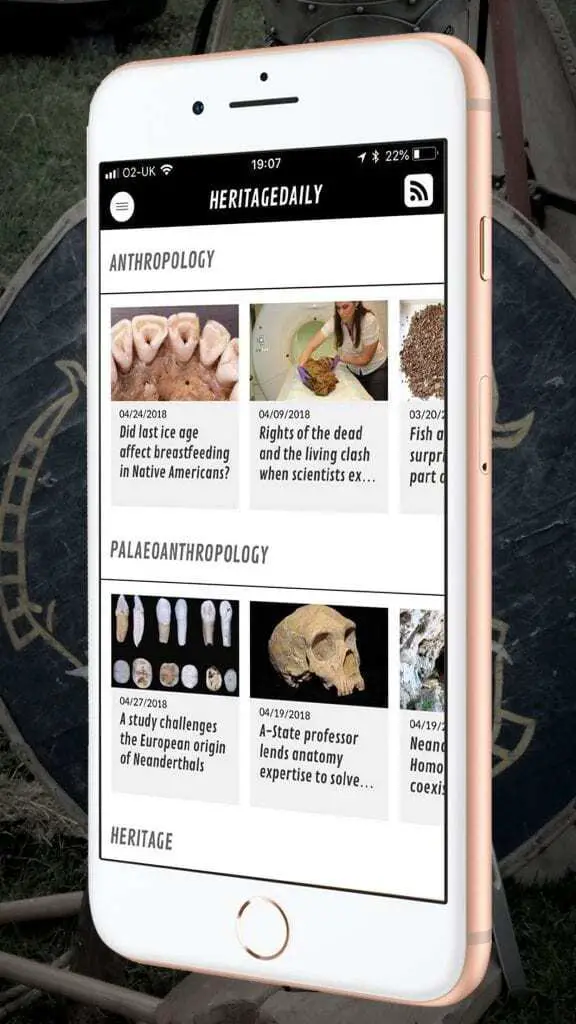
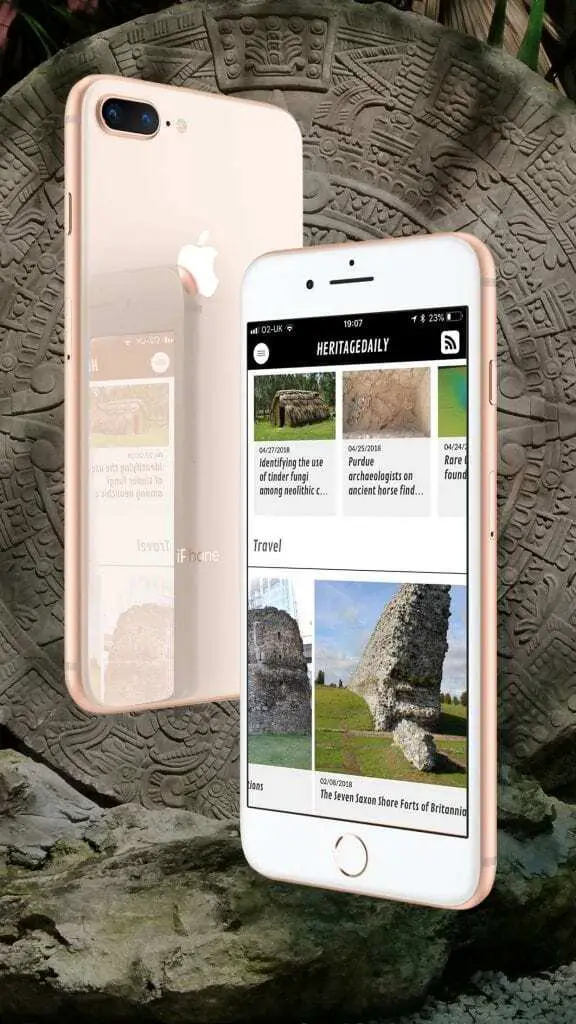
HeritageDaily, the online magazine and publisher has launched a major update to its dedicated app for iTunes and Google Play

HeritageDaily first published in 2011, since then, the publication has grown to become a recognised brand across academic circles, particularly in archaeology, anthropology and palaeoanthropology.

- Advertisement -

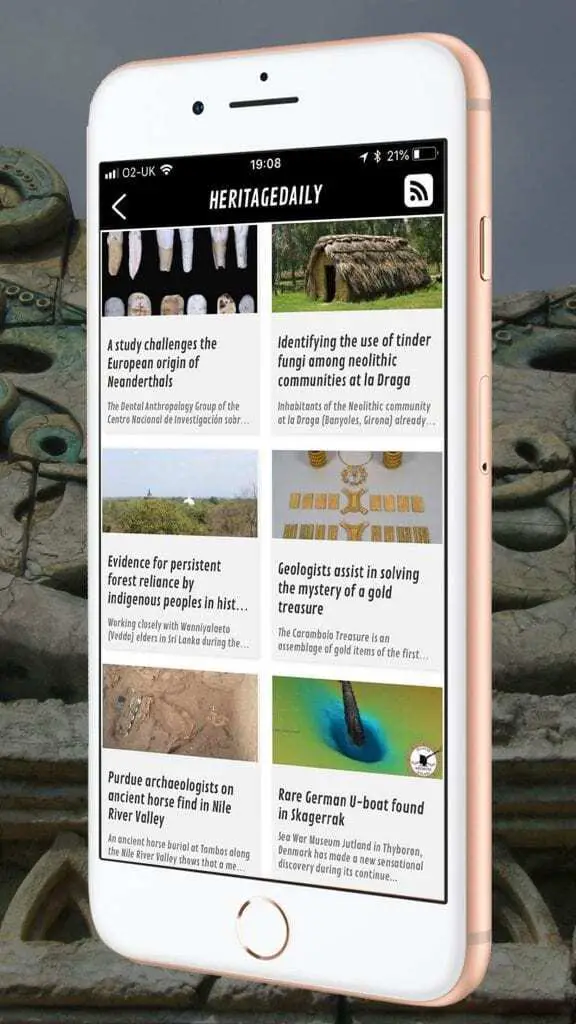
The application (now available for all iPhone models on iTunes, in addition to the Android App live on Google Play) allows customers to carry in their pocket, the latest discoveries across these primary disciplines, in addition to several other studies such as geology, palaeontology, astronomy, chemistry, physics, natural science and many more..
Our promise:

Fact not fiction.
No pseudo-science or satire.
Unbiased with no political or religious agenda.
Our contributors range from the leading academic institutions, universities and research projects from across the globe.

App Specifications:

- Advertisement -

Released: May 31, 2017
Version: 1.0
Size: 69.8 MB
Language: English

Compatibility:

Requires iOS 9.0 or later. Compatible with iPhone, iPad, and iPod touch.

Subject Areas:

Archaeology, Anthropology, Heritage, Palaeontology, Palaeoanthropology, Atmospheric Science, Geology, Space & Planetary, Natural Historty, Biology, Chemistry, Physics, Tech & Engineering & Travel


HeritageDaily also recently published “Hidden London” for a partner project with the London History Group – Mapping London’s forgotten historical monuments.


- Advertisement -

Stay Updated: Follow us on iOS, Android, Google News, Facebook, Instagram, Twitter, Threads, TikTok, LinkedIn, and our newsletter

spot_img
Mark Milligan
Mark Milligan
Mark Milligan is a multi-award-winning journalist and the Managing Editor at HeritageDaily. His background is in archaeology and computer science, having written over 8,000 articles across several online publications. Mark is a member of the Association of British Science Writers (ABSW), the World Federation of Science Journalists, and in 2023 was the recipient of the British Citizen Award for Education, the BCA Medal of Honour, and the UK Prime Minister's Points of Light Award.
spot_img
spot_img

Mobile Application

spot_img

Related Articles

Underwater archaeologists discover seal ring depicting the Lighthouse of Alexandria

Underwater archaeologists excavating the Eastern Harbour of Alexandria have discovered a bronze seal ring depicting the Lighthouse of Alexandria.

Rare early medieval boat burial discovered in Poland

Archaeologists from the Institute of Archaeology and Ethnology of the Polish Academy of Sciences (IAE PAN) have discovered a rare early medieval boat burial during excavations at Chodlik in eastern Poland.

Melting ice reveals 6,000-year-old artefacts in Norwegian mountains

Melting ice in Norway’s highest mountains is revealing archaeological remains dating back as far as 6,000 years, providing new insights into prehistoric activity at high elevations.

Ice Age spearheads reveal how early Americans adapted to new landscapes

An analysis of around 500 stone spearheads has revealed how Ice Age hunter-gatherers adapted to unfamiliar landscapes in the Tennessee River Valley.

Pre-Hispanic frog pendants shed light on ancient Maya trade networks

Archaeologists in Mexico are studying a collection of pre-Hispanic shell pendants that could provide new insights into ancient Maya trade networks, ritual practices and technological knowledge.

Bronze hand cannon offers rare evidence of early Korean firearms

Archaeologists in South Korea have authenticated a bronze hand cannon dating to the late Goryeo or early Joseon period, providing rare evidence for the early development of firearms on the Korean Peninsula.

Evidence of 15th-century fortified windmill unearthed in Poland

More than 300 archaeological features discovered on Windmill Hill in Puck could include rare fortifications linked to the Thirteen Years’ War

10,500-year-old wooden structures discovered beneath German lake

Rare Mesolithic timbers found 20 metres underwater could reveal previously unknown construction by Stone Age hunter-gatherers