Penn Museum archaeologists excavating at the desert site of Abydos, Egypt have discovered the remains of a subterranean pharaonic boat burial dating to the reign of Senwosret III (c. 1850 BCE), according to Dr. Josef Wegner, Penn Museum Associate Curator in the Egyptian section and long-time Project Director of the Abydos excavations.
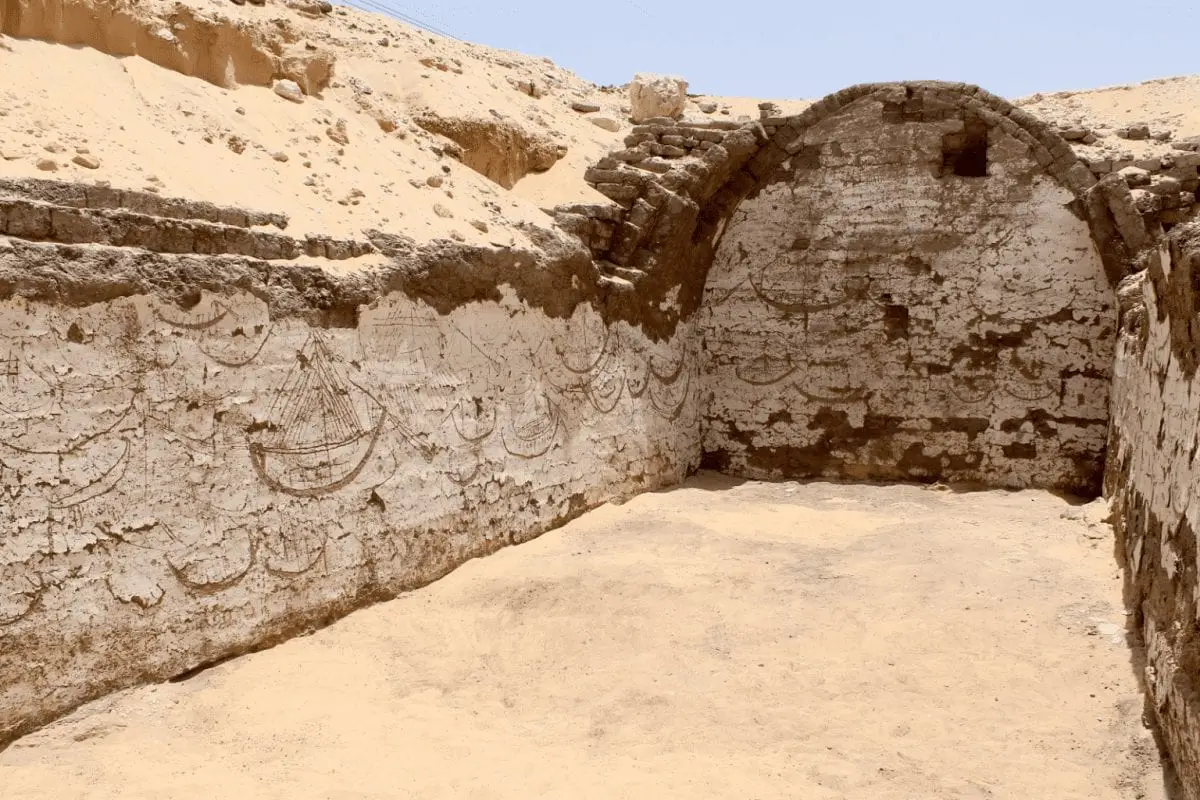
Of the original boat, most likely a pharaonic funerary boat built for the Pharaoh Senwosret III, only a few planks remain. Inside the chamber, however, an unusual tableau survived the millenia: incised on all four of the white-washed plaster walls of the vaulted, elongated burial chamber (about 21 meters long and 4 meters wide), are drawings of more than 120 pharaonic watercraft.
More than 145 pottery vessels, buried with their necks facing toward the entrance to the ceremonial boat burial, were also uncovered.
Dr. Wegner reported on the discovery in the International Journal of Nautical Archaeology. Future excavation and research will, he hopes, help to answer questions about the burial and the tableau: “The boat building is one of a group of subterranean structures near the underground tomb of pharaoh Senwosret III. Continued excavations at the site may reveal additional boats, as well as other features connected with the funerary ceremonies of Senwosret III, or the other kings who were buried in the royal necropolis at South Abydos during the period about 1850-1600 BCE.”
Of the wall tableau, Dr. Wegner noted: “The astounding concentration of boat drawings in the building is unique and was tremendously surprising to discover. It is also clear there once were many more boats decorating the building’s vaulted roof. The incongruous situation of watercraft in the desert presents numerous questions and mysteries begging for explanation. Who made these drawings, and why, are key questions.” Of the wall tableau, Dr. Wegner noted: “The astounding concentration of boat drawings in the building is unique and was tremendously surprising to discover. It is also clear there once were many more boats decorating the building’s vaulted roof. The incongruous situation of watercraft in the desert presents numerous questions and mysteries begging for explanation. Who made these drawings, and why, are key questions.”
Abydos and the Penn Museum
Penn Museum scholars have been excavating at the site of Abydos since 1967, as part of the Pennsylvania-Yale-Institute of Fine Arts/NYU Expedition to Abydos. Abydos is located on the western side of the Nile in Upper Egypt and was a religious center associated with the veneration of the funerary god Osiris. Dr. Josef Wegner has been excavating at the site of Abydos since 1994. Excavations in the area of South Abydos have revealed a thriving royal cult center that developed around the subterranean tomb of pharaoh Senwosret III located at the area called Anubis-Mountain. The newly discovered boat burial is about 65 meters east of the front of the tomb enclosure of the Pharaoh Senwosret III.