
Date:

LiDAR study reveals 5,000-year-old fortified settlements

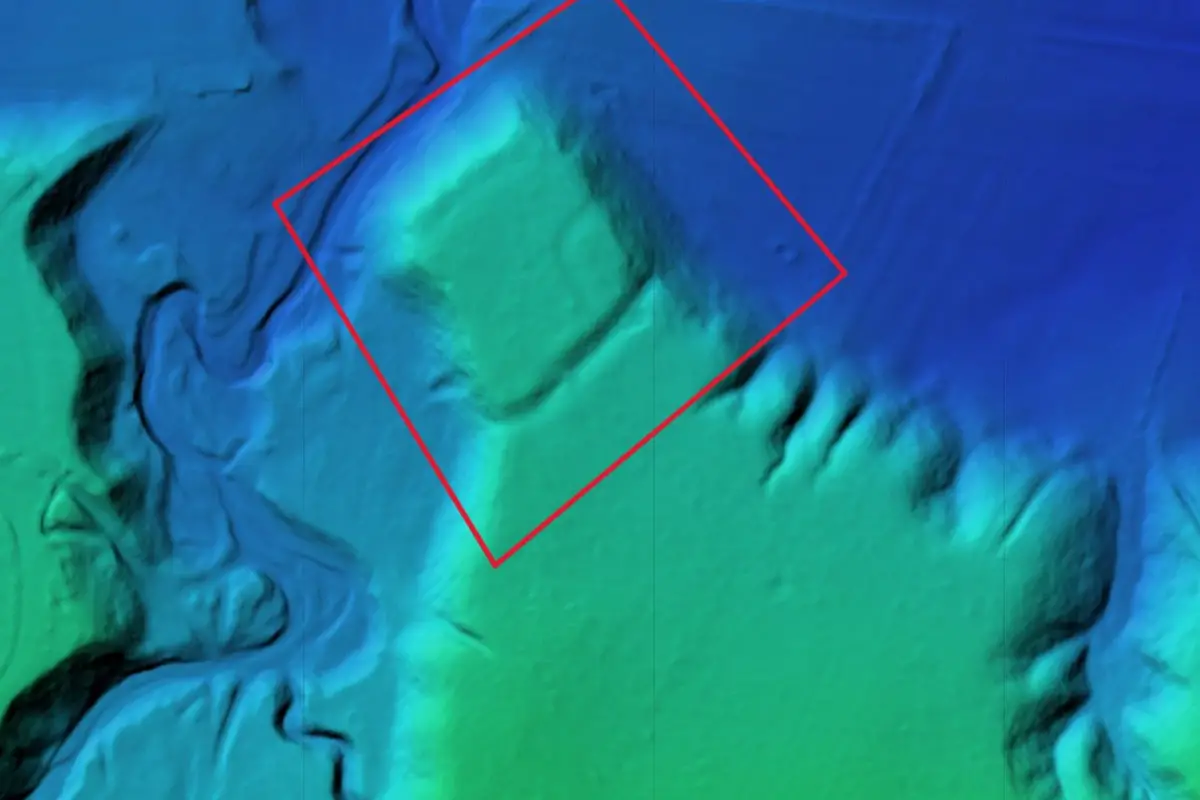
Archaeologists using LiDAR have discovered 5,000-year-old fortified settlements in Romania’s Neamț County.

Light Detection and Ranging (LiDAR), is a method of remote sensing using light in the form of a pulsed laser to measure ranges (variable distances) to the Earth. The differences in the laser return times and wavelengths can be used to compile a 3-D digital map of the landscape.

- Advertisement -

The study is a joint collaboration between Geocad Services, Geo Edu Lab, and the National Institute for Research and Development for Earth Physics.

According to a joint press statement, LiDAR mounted to drones revealed the settlements in the dense forests near Târgu Neamț in Romania’s Neamț County.

Fortified settlements dating back approximately 5,000 years were discovered, originating from the Eneolithic period (the transition between the Neolithic and Bronze Age) and the Bronze Age.

Professor Vasile Diaconu from the Neamț National Museum Complex, said: “LiDAR scans showed that most of the fortified sites were located in high areas, which had good visibility and were reinforced by ditches and even earthen mounds in order to increase their defensive capacity.”

- Advertisement -

“Field measurements indicated that some of these ditches had impressive dimensions with lengths of several hundred metres, which required considerable human effort in the construction,” added Professor Diaconu.

The study also utilised the same non-invasive technology to examine Neamț Citadel, a medieval fortress constructed in the 14th century during the reign of Petru I of Moldavia. The collected data contributes both to the promotion of tourism by enhancing the historical significance and to the documentation of the monument with new archaeological insights.

Header Image Credit : Geocad Services

Sources : Geocad Services

- Advertisement -

Stay Updated: Follow us on iOS, Android, Google News, Facebook, Instagram, Twitter, Threads, TikTok, LinkedIn, and our newsletter

spot_img
Mark Milligan
Mark Milligan
Mark Milligan is a multi-award-winning journalist and the Managing Editor at HeritageDaily. His background is in archaeology and computer science, having written over 8,000 articles across several online publications. Mark is a member of the Association of British Science Writers (ABSW), the World Federation of Science Journalists, and in 2023 was the recipient of the British Citizen Award for Education, the BCA Medal of Honour, and the UK Prime Minister's Points of Light Award.
spot_img
spot_img

Mobile Application

spot_img

Related Articles

Rare 5th-century BC bone stylus discovered in Gela excavation

Archaeologists working in the Orto Fontanelle area of Gela have uncovered a remarkably rare and perfectly preserved bone ceramist’s stylus, a find being hailed as one of exceptional historical and archaeological value.

Nationally significant Anglo-Saxon burial ground uncovered at Sizewell C

Archaeologists have uncovered a nationally significant Anglo-Saxon burial ground during preparatory works for the Sizewell C nuclear power station in Suffolk.

Inscriptions reveal the lives behind the ancient temples of the Middle East

Stone temples rising from the deserts of the ancient Near East were meant to embody the power of the gods.

World’s oldest poison arrows discovered

Even in the deep Stone Age, humans possessed biochemical knowledge that appears extraordinary by modern standards.

Tang Dynasty noblewoman buried with gold hair ornaments

Archaeologists in northwest China have identified an elaborately furnished tomb belonging to a young Tang Dynasty noblewoman, providing significant evidence for the extent of China’s engagement with trans-Eurasian exchange networks during the late seventh century.

Near-complete bronze carnyx among Iron Age hoard discovery

A remarkable hoard of Iron Age metalwork dating back approximately 2,000 years has been uncovered in West Norfolk, shedding new light on the ceremonial and martial traditions of Britain’s Celtic communities.

Protective “Solomon’s Knot” mosaic uncovered in ancient Smyrna

Archaeologists have uncovered a rare mosaic room in the ancient city of Smyrna, featuring a central “Solomon’s Knot” motif believed to have served as a protective symbol against evil and misfortune during Late Antiquity.

Study identifies urban metropolis at X’baatún

Significant progress is being made in the recognition and documentation of X’baatún, a little-known Maya archaeological site located within Oxwatz Park in the ejido of Tekal de Venegas, Yucatán.