
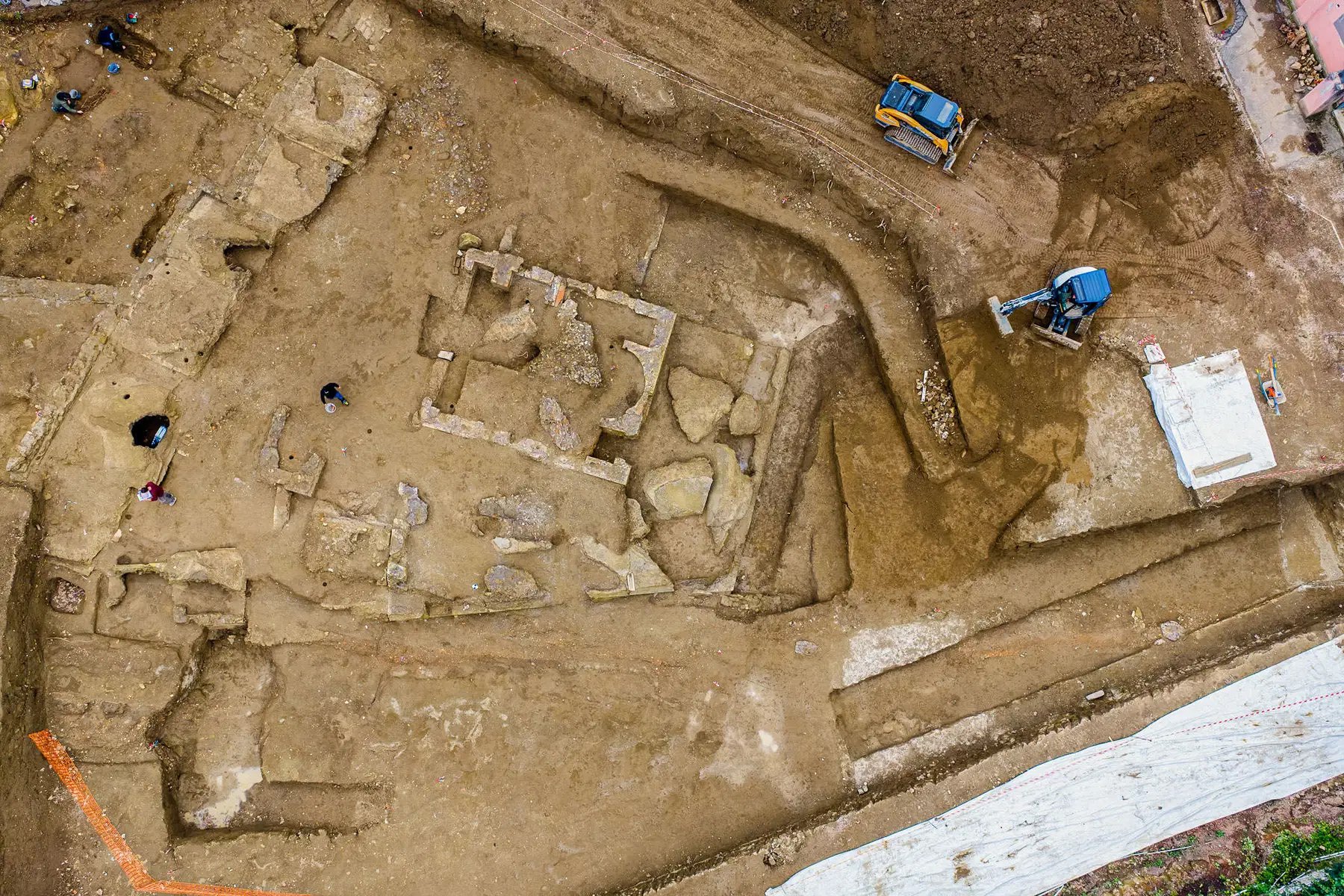
Archaeologists conducting preventive excavations in southern Rome have uncovered an extensive funerary complex within the ancient Ostiense Necropolis, revealing exceptionally preserved tombs, decorated burial structures, and later graves dating across several centuries of Roman history.
The discovery was made during archaeological investigations ordered by Italy’s Ministry of Culture ahead of construction work for a new student residence on Via Ostiense, near the Basilica of San Paolo Fuori le Mura.
This excavation, led by the Special Superintendency of Rome, uncovered a large burial site containing masonry tombs, pit burials, and richly decorated funerary architecture.
“This discovery offers another important testimony from one of the largest necropolises of ancient Rome,” said Italian Culture Minister Alessandro Giuli, adding that cultural authorities aim to preserve and share the site for future generations.
Daniela Porro, Rome’s Special Superintendent for archaeology, said the find was evidence of the city’s extraordinary archaeological complexity that remains apparent even in places in the midst of urban transformation.
The high quality of the structures, the careful organisation of burial spaces, and the richness of decorative features provide great opportunities for scientific research, according to Porro.
Conducted by archaeologist Diletta Menghinello, the excavation also uncovered a cluster of five imperial-era funerary buildings about one metre below the ground level. The structures, arranged along a northeast–southwest axis, have quadrangular plans and vaulted ceilings.
In front of them are two smaller buildings and a sixth building, which is oriented perpendicularly, indicating that the complex may have been constructed around an internal courtyard.
A preliminary analysis suggests that many of the tombs may be columbaria — burial chambers with niches for cremation urns. Although the work is still relatively young, archaeologists have found rather ornate decorative details: frescoed plaster with bands and plant motifs, stucco ornamentation, and small architectural frames showing figures associated with Roman funerary symbolism, including praying figures and Winged Victories.
Nearby, researchers also came across an apsidal hall, along with another large brick-built room with traces of a mosaic floor. Their original use is unknown and will be studied further as excavations continue.
Evidence shows that in Late Antiquity a simpler burial ground developed behind the monumental imperial tombs. This later cemetery contained modest pit graves, stacked closely together and separated from the earlier structures by a long wall of tuff blocks.
Archaeologists say the site forms part of the vast Ostiense Necropolis, which expanded between the late Republican period and the late Roman Empire. The newly uncovered remains could provide valuable insights into the necropolis’ layout, burial customs, and the social history of ancient Rome.
Sources : Special Superintendency of Rome