
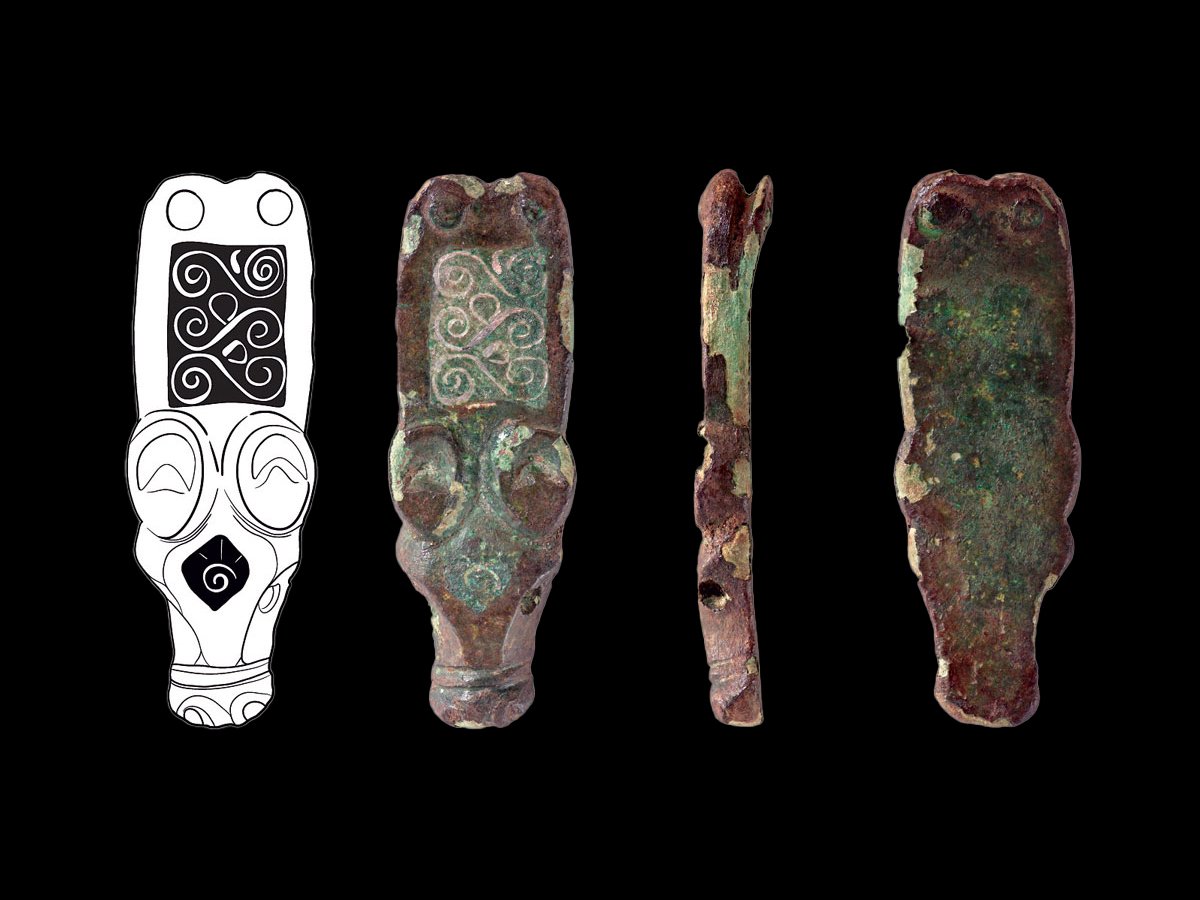
A finely decorated copper alloy strap end uncovered in Halesworth, Suffolk, is offering new insight into the craftsmanship, dress, and daily life of the Late Anglo-Saxon period.
The object is one of a class of fittings used to cap and protect the ends of leather or textile straps and was discovered during archaeological excavations in 2024. While functional in purpose, strap ends were often highly decorative, reflecting both personal style and regional artistic traditions. Thousands are known from across England, though examples recovered from controlled excavations—rather than chance finds—are particularly valuable for the context they provide.
The strap end was found within a site that revealed extensive evidence of Middle to Late Anglo-Saxon occupation, likely representing a newly established suburb of Halesworth as the town expanded. Archaeologists identified at least four buildings, primarily posthole structures, alongside hearths, refuse pits and a small cemetery containing seven inhumation burials. A further structure, combining beam slots and postholes, may represent a small chapel, though this remains tentative.
Material collected from the site indicates a diverse and industrious settlement. Finds include lead working waste, quern stones, a spindle whorl and a heckle tooth — an implement used in preparing fibres such as wool or flax. Taken together, this assemblage suggests textile production and other forms of craft activity were taking place alongside domestic life. The strap end itself stands out for its intricate decoration. Dating to the 9th century, it features a stylised animal, possibly horse-like, with rounded ears and an elongated snout.
The figure is placed in the rectangular panel surrounded by ‘S’-shaped scrolls of silver wire, which were embedded in niello, a black inlay paste that provides an attractive visual contrast.
A smaller panel on the animal’s forehead contains a single curl of silver wire, possibly part of a mane. On the other end of the piece, the fitting is split and riveted so that a strap can connect it. The durability with ornamentality shows just how important these accessories were to Anglo-Saxon dress: even everyday items could have aesthetic and social significance.
The decorative style of the piece is typical of East Anglia, with close parallels found in Suffolk and Norfolk. Such clustering has prompted archaeologists to propose that it might well have been created in special regional craft shops, possibly centred on Ipswich. As a fine instrument and a situationally contextualized archaeological find, the Halesworth strap end provides a vivid reminder of the skill of Anglo-Saxon artisans and the material culture of a community in transition.
Sources : Cotsworld Archaeology




