
The human environmental footprint is not only deep, but old.
Ancient traces of this footprint can be found in animal bones, shells, scales and antlers at archaeological sites. Together, these specimens tell the millennia-long story of how humans have hunted, domesticated and transported animals, altered landscapes and responded to environmental changes such as shifting temperatures and sea levels.
Now, that story is available digitally through a new open-access data platform known as ZooArchNet, which links records of animals across biological and archaeological databases.
Making these specimen records accessible digitally helps provide a long-term perspective on current biodiversity crises, such as animal extinction and habitat loss, and could lead to more informed conservation policies, said Michelle LeFebvre, postdoctoral associate at the Florida Museum of Natural History and lead author of a study introducing ZooArchNet.
“If we’re interested in really understanding the long history of human-animal interactions and environmental change, these records are key,” she said. “They fill a gap between paleontological and modern records and reconstruct biodiversity baselines from the earliest periods of human history.”
Zooarchaeological specimens – which can range from a carved bone pin to a shell fragment from a heap of discarded oysters – provide both biologically and culturally important information, LeFebvre said.
ZooArchNet connects the biological data for these ancient animal specimens in VertNet and other biodiversity databases with their associated archaeological information in cultural databases such as Open Context.
Robert Guralnick, co-principal investigator of ZooArchNet and Florida Museum associate curator of bioinformatics, said the platform’s goal is “not to be ‘yet another data portal,’ but a connector across disciplines. In that way, ZooArchNet is more of a bridge than anything else, but it does that bridging in a formal way to make data work.”
This interdisciplinary connection will enable data-rich biodiversity research essential for understanding humans’ widespread impact on the environment, said Kitty Emery, co-principal investigator of ZooArchNet and Florida Museum associate curator of environmental archaeology.
“We often think that our dramatic influence on the natural world is a modern phenomenon, but in reality, humans have shaped the environment for hundreds of thousands of years,” she said. “Factoring that history into current studies of biodiversity can provide ancient lessons about how and why people make certain decisions about using their environment. Why do people hunt some animals to extinction and domesticate others? What motivates them to shift from sustainable environmental uses to ones that decimate landscapes? The human component provides that side of the equation – an essential piece of the puzzle when trying to solve modern environmental problems.”
As conservation groups prioritize species on the brink, zooarchaeological records can offer insights into where animals lived in the past, how their distribution has shifted, what roles people may have played in their movements and how close relationships between people and domesticated animals have evolved over time. Sometimes these records tell a surprising story, LeFebvre said.
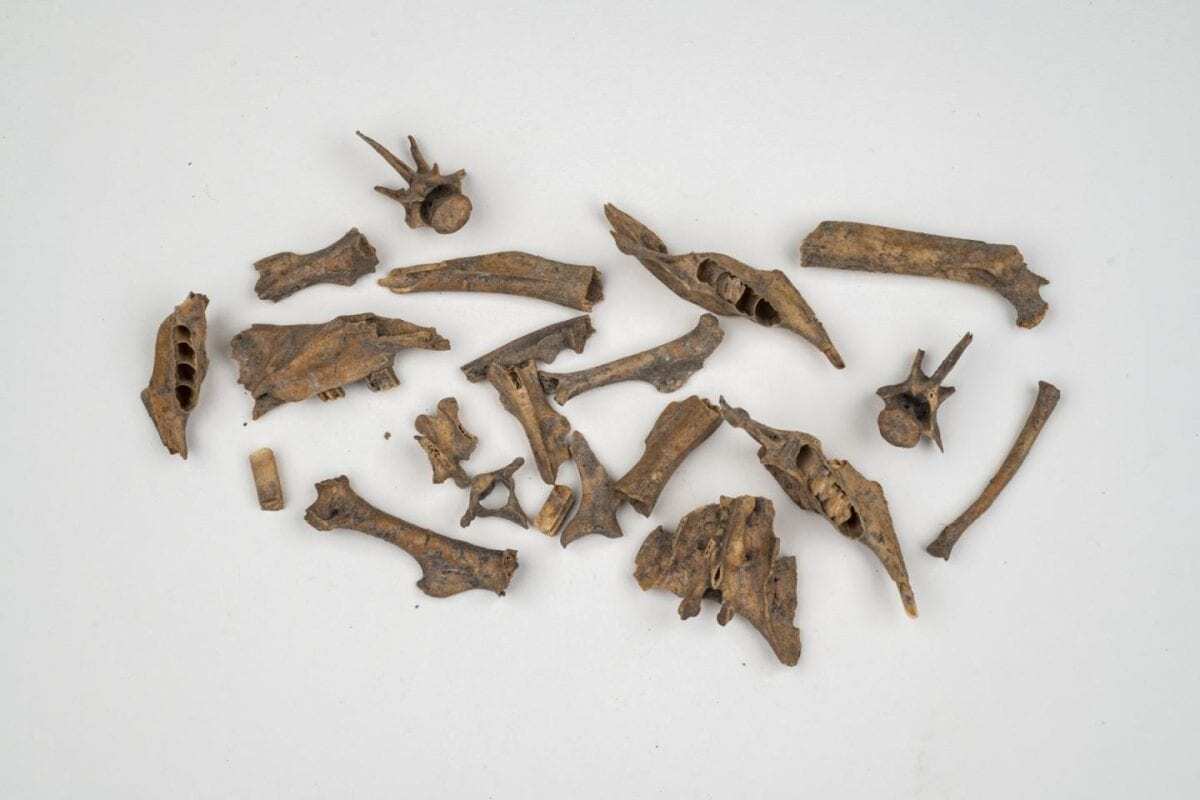
Her work with historical records of hutia, Caribbean rodents that resemble small capybaras, shows that indigenous people transported some of these animals to new islands, expanding their range into areas where they had not lived previously. These records can lead to better-informed conservation of hutia, several species of which are currently vulnerable to extinction or in danger of disappearing from certain islands, LeFebvre said.
“When you see people saying, ‘This critter is native to this island chain,’ these records help us say, ‘Actually, it was human-introduced and we should think about what that may mean for conservation efforts over time,'” she said. “Zooarchaeological specimens really contribute to what we conceptualize as natural distributions.”
Zooarchaeological specimens can also provide insights into how, when and why humans domesticated animals in the distant past. Research by Emery and her colleague Erin Thornton of Washington State University on the earliest uses of the Mexican domesticated turkey, the ancestor of modern domestic turkeys, highlights how motivations for raising animals can change over time.
“Our recent work suggests that these birds were first domesticated for their feathers and symbolic links to power and prestige, rather than as a source of food,” she said.
Archaeology can also illuminate how people contended with challenges such as rising sea levels and fluctuating temperatures in the past.
Ongoing work by LeFebvre and Neill Wallis, Florida Museum associate curator of archaeology, shows that the diet of people on Florida’s Gulf Coast transitioned from freshwater to marine food sources as the climate cooled 1,400 years ago.
“Humans have dealt with climate change in the past, though not at the same scale of devastation we’re facing now,” LeFebvre said. “Reconstructing their responses provides us with a critical perspective. Where did people go? What changes in animals and plants happened in the past that we can anticipate happening again? We have a long human record that we can look back to and model off of.”
One of the steps in the creation of ZooArchNet was designing protocols to standardize and publish zooarchaeological data in ways that both biodiversity and archaeological researchers could use, Emery said.
“Zooarchaeologists have been getting data out there, but until now, the data have not been discoverable, searchable and usable in an open-access way by the larger biological research community,” she said. “ZooArchNet allows zooarchaeological data to be part of the massive interdisciplinary movement toward biodiversity data sharing and accessibility while preserving the human component of how life on Earth has changed.”
LeFebvre said that making zooarchaeological data discoverable via ZooArchNet means “the sky’s the limit” for new types of interdisciplinary collaborations and research questions.
“If we want to conduct studies that will help inform policy, the data need to be open to all kinds of minds and disciplines. That’s the contribution I’m most excited to be a part of. That’s bigger than any one discipline or research community – that’s huge.”
Researchers who are interested in contributing data to ZooArchNet should contact Emery or Guralnick or complete the contact form on the ZooArchNet website.
Header Image – These rodent remains from the Caribbean islands help illuminate the role humans played in transporting animals into areas where they had not previously lived. Historical specimens like these can inform modern conservation policies by refining scientists’ understanding of animals’ past distributions. Credit : Florida Museum photo by Kristen Grace




