
Date:

Flawed forensic science may be hampering identification of human remains

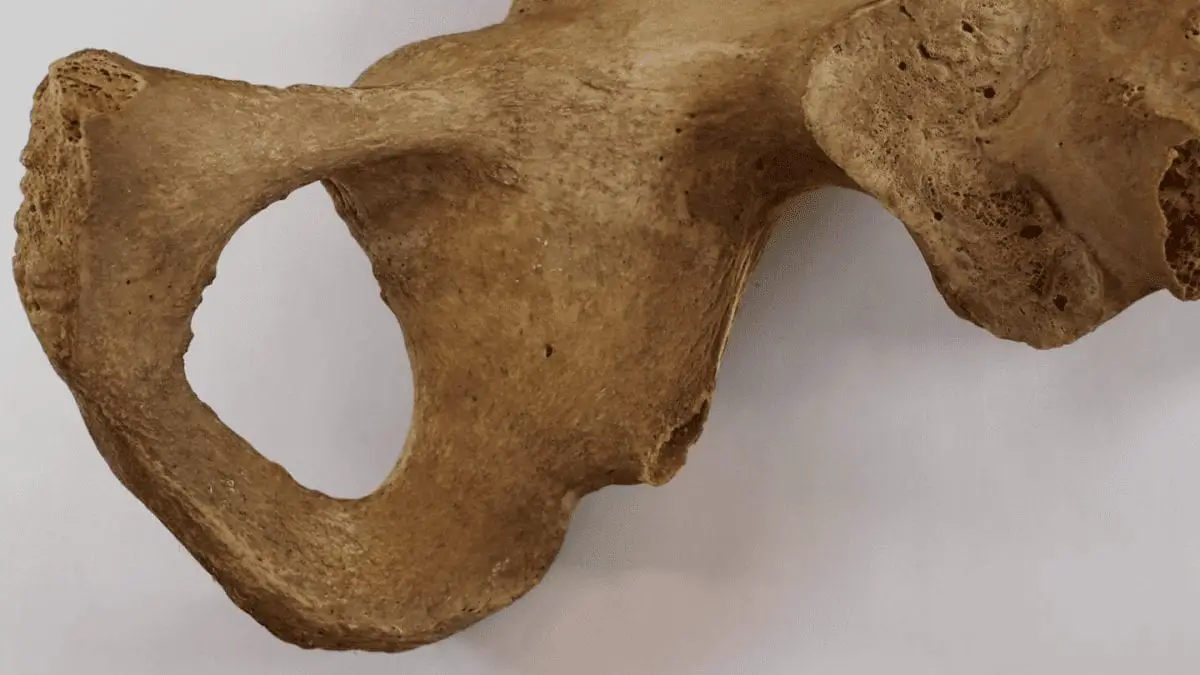
Research from The Australian National University (ANU) has cast doubt on a method used in forensic science to determine whether skeletal remains are of a person who has given birth.

The presence of parturition scars – marks often found on female pelvis bones – have commonly been used as an indicator of child birth. This technique is used in police investigations to narrow down the identity of human remains.

- Advertisement -

Project leader ANU PhD candidate Clare McFadden said if skeletal remains were incorrectly identified as being of someone who has given birth, it could lead to complications or delays for important police work.

“In forensics it could have serious consequences. It could send investigators down completely the wrong path,” Ms McFadden said.

“It could potentially slow things down by excluding individuals who otherwise would be candidates for the investigation.”

Ms McFadden also said that use of the method in archaeology could lead to historical inaccuracies.

- Advertisement -

Despite the practise being in common use, particularly in the US, since first being proposed in the 1910s, a number of studies into parturition scars have resulted in conflicting findings.

Ms McFadden reanalysed data used for those studies and found the scarring was not a reliable indicator of childbirth.

“We found childbirth has a very weak association with these markers, but they strongly correlate with sex,” she said.

“A lot of the older studies only looked at females, but there’s men with these scars, so there has to be something else going on.”

Ms McFadden said her research found that most females had this type of scarring, compared to a small minority of males.

“We think they might have something to do with going through puberty, a bit like stretch marks on the pelvis,” she said.

“Proportionality more females than males go through significant growth of the pelvis during puberty.”

AUSTRALIAN NATIONAL UNIVERSITY

- Advertisement -

Stay Updated: Follow us on iOS, Android, Google News, Facebook, Instagram, Twitter, Threads, TikTok, LinkedIn, and our newsletter

spot_img
Mark Milligan
Mark Milligan
Mark Milligan is a multi-award-winning journalist and the Managing Editor at HeritageDaily. His background is in archaeology and computer science, having written over 8,000 articles across several online publications. Mark is a member of the Association of British Science Writers (ABSW), the World Federation of Science Journalists, and in 2023 was the recipient of the British Citizen Award for Education, the BCA Medal of Honour, and the UK Prime Minister's Points of Light Award.
spot_img
spot_img

Mobile Application

spot_img

Related Articles

Study reveals declining inequality in Bronze Age city of Mohenjo-daro

A new study suggests that economic inequality declined as the Bronze Age city of Mohenjo-daro developed, challenging the assumption that urbanisation inevitably led to greater social inequality.

Ancient cave paintings reveal thousands of years of religious activity in China

A new study of ancient cave paintings in the Altai Mountains of north-western China has revealed evidence of artistic and religious activity spanning thousands of years.

Church appeals for help deciphering mysterious labyrinth

The Churches Conservation Trust is appealing to the public to help unravel the mystery of a labyrinth at St Mary’s Church in Itchen Stoke, Hampshire, where unusual patterns of sunlight have raised questions about its original purpose.

Geophysical survey reveals possible hidden chambers in Italy’s “Cave of Venuses”

A geophysical survey of the Grotta delle Veneri (Cave of Venuses) in southern Italy has identified possible hidden cavities that may connect to the existing prehistoric cave system.

184 cuneiform tablets discovered in Hittite royal archive

Archaeologists excavating the ancient city of Kayalıpınar in Türkiye have discovered a Hittite royal archive containing 184 cuneiform tablets and fragments.

3,000-year-old bronze sword discovered in submerged settlement in Italy

Underwater archaeologists have discovered a 3,000-year-old bronze sword during excavations of a submerged Bronze Age settlement in Lake Mezzano, Italy.

Underwater archaeologists discover seal ring depicting the Lighthouse of Alexandria

Underwater archaeologists excavating the Eastern Harbour of Alexandria have discovered a bronze seal ring depicting the Lighthouse of Alexandria.

Rare early medieval boat burial discovered in Poland

Archaeologists from the Institute of Archaeology and Ethnology of the Polish Academy of Sciences (IAE PAN) have discovered a rare early medieval boat burial during excavations at Chodlik in eastern Poland.


