
In September 2014, archaeologists from the Danish Castle Centre and Aarhus University announced the discovery of a Viking fortress in a field belonging to Vallø Manor, located west of Køge on the east coast of Sealand.
This was the first discovery of its kind in Denmark in over 60 years. Since then, archaeologists have been waiting impatiently for the results of the dating of the fortress.
“When the discovery was published back in September, we were certain that we had found a Viking ring fortress, but since then there have been intense discussions online and amongst archaeologists about whether we were right. Now we know without doubt that we have found a fortress from the 10th century,” says archaeologist Nanna Holm, curator of the Danish Castle Centre.
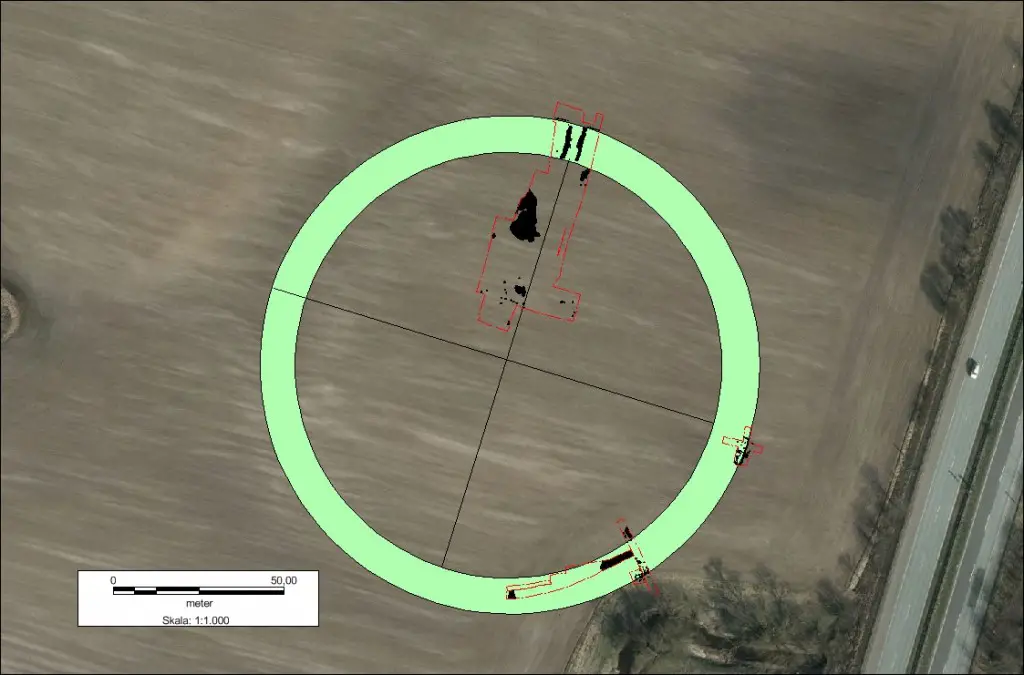
Two carbon-14 dating results have removed all doubt regarding the authenticity of the Viking fortress. The carbon-14 dating was performed by the AMS 14C Dating Centre at the Department of Physics and Astronomy at Aarhus University in close collaboration with Accium BioSciences’ laboratories in Seattle.
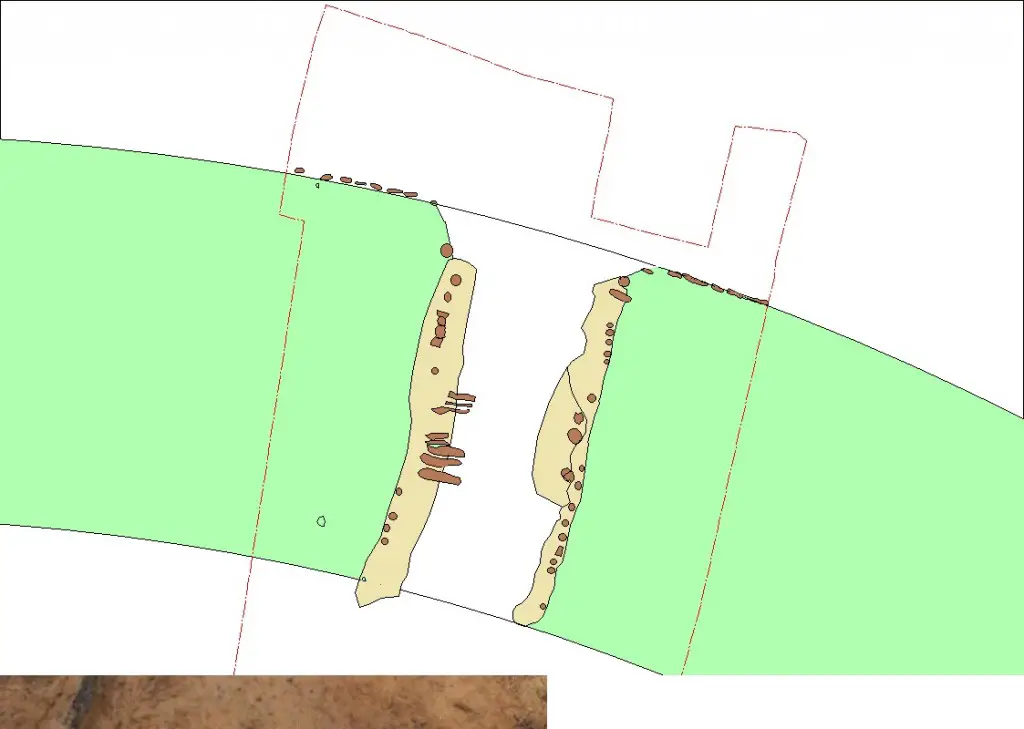
“The two samples were both taken from the outermost tree rings of charred logs that were found in the northern gateway of the fortress. The results of the two samples are almost identical: The fortress was built in the period between the year 900 and the beginning of the 11th century,” explains Marie Kanstrup, an employee at the AMS 14C Dating Centre at the Department of Physics and Astronomy, Aarhus University.
Dating is important in determining the role of the fortress in the history of the Viking age
Søren Sindbæk, a professor of medieval archaeology at Aarhus University, explains that archaeologists are still working to date the fortress more precisely.
“We would like to determine a specific year. The carbon-14 method can’t provide that, but we are working on different methods that can help us date the fortress even more precisely.”
“We can’t say whether or not it’s Harald Bluetooth’s fortress yet, but now that we’ve dated it to the 10th century, the trail is getting hotter.
The things we’ve discovered about the fortress during the excavations all point in the same direction. We already know that there’s a good chance that we’ll find conclusive evidence next year,” says Sindbæk.
A structure meant to symbolise power
Even though the excavations have closed for this year, the finds bode well for future efforts. The archaeologists’ investigations have also revealed that the Viking fortress was built right next to the open sea.
“The excavation showed that there was a basin of fresh or brackish water right next to one side of the fortress – presumably a quite narrow inlet leading out to Køge Bay. When the fortress was built, hundreds of tonnes of the heavy clay subsoil would have had to have been dug out into the sea basin,” explains Nanna Holm.
According to Nanna Holm, this work was undertaken for no other reason than to give the fortress an impressive location. The structure was meant to signal power.
The same master builder may be responsible
The excavation has also shown that the construction of the fortress is closely related to other Viking fortresses such as Fyrkat near Hobro, Aggersborg near the Limfjord and Trelleborg near Slagelse. These fortresses were undoubtedly built during the reign of Harald Bluetooth, and still more evidence suggests that Borgring, as the fortress has been named, might have belonged to the same building programme.
“There are a lot of similar details in these structures. And it’s been wonderful to see the same things coming to light at Borgring. In addition to the structure of the rampart and the gates, we have also found traces of a street with wood paving running along the inside of the rampart – just like in Fyrkat, Aggersborg and Trelleborg. The most striking thing, however, is the measurements of the fortress. The rampart of Borgring is 10.6 metres wide. That is exactly the same width as the rampart of Fyrkat. So it’s hard to avoid the sense that the same master builder was responsible,” says Sindbæk.
PLEASE SUPPORT OUR CROWDFUNDER ON KICKSTARTER
THE-Heritage Explorer (Magazine)
Support us in launching a printed magazine that explores the history, archaeology, travel, culture and exploration of the world.
THE Heritage Explorer is an exciting print magazine and publishing business proposal dedicated to delivering you the latest exploration, travel, archaeology, culture and heritage news.
A concept born out of the aspirations of a team of journalists, archaeologists and historians to build a credible and sustainable publishing business that will not only provide the public with entertaining articles and up-to-date research, but also to develop career opportunities for all those involved.
This is not just a magazine, but the opportunity for you to plant the seeds for a real contender in the publishing market place. Find out more




