
Slaves being transported in Africa, 19th century engraving : Wiki Commons
The African Origins website at Emory University, launched last year with the names of 10,000 Africans who were liberated from the slave trade in the 19th century, has added the names of more than 80,000 African captives to the site, making it the largest and most comprehensive record of the identity of individuals caught up in the slave trade to the Americas.
With this latest information now accessible, researchers again are inviting those who might recognize African names “to tell us which modern country, language and culture still uses the name today,” says David Eltis, Woodruff Professor of History and leader of the project.
Eltis and researchers will then use the identifications made by visitors to the site to construct a geographic profile of the origins of African captives. With the new information, “for the first time we will be able to see not only where slaves left the African coast, but the probable location within Africa where their forced journey to the Americas began,” Eltis says.
For most of the duration of the slave trade, once a person was forced onto a slaving vessel, “her identity and history became effectively lost,” says Eltis. But after the slave trade was outlawed in 1807, authorities began intercepting illegal slave transports, and for the first time, maritime courts recorded the African captives’ true names, sometimes more than once.
Registers containing information on more than 90,000 individuals survived in the national archives of Sierra Leone and the United Kingdom, and it is these records that Eltis and a team of researchers have been painstakingly recreating in both written and audio form on the website.
The names in the expanded database comprise a record of well over half of all captives removed from slave ships in the 19th century. They represent every major language and ethnic group caught up in the forced migration of millions of people out of Africa after 1807.
“The database contains the names and records of Africans found on board 515 different slave vessels captured between 1808 and 1862,” says Eltis. “There are records of captives leaving from and arriving at every significant slaving port on either side of the Atlantic. In short, it covers every major link between African and the Americas during the last six decades of the transatlantic slave traffic.”
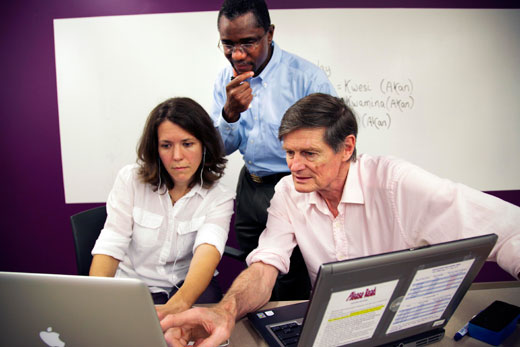
Because African languages had no written form at that time, the spelling of names was listed phonetically. The same name could appear in the records with different spellings, and researchers have provided up to three alternative renditions (together with recordings of their pronunciations) on the website to increase the accuracy of the identification.
Visitors to African-Origins.org are invited to search for a specific African name that they know, select a country or countries, then hit the Explore button to see if the name exists on the site. Once they find the name, they can hear several different pronunciations of it and see a list of individuals with that name, along with other information such as age, gender and sometimes other personal details or country of origin.
“If you recognize the name and know the origin of the name that you find, then you click the Contribute button,” says Nafees Khan, project manager. “You can then register or log in on the site and give details of what you know about the spelling of the name and where it originated.” Scholars then will review the contributor’s information, looking for consensus among respondents.
“Since May 2011 we have been able to identify the modern ethno-linguistic associations of nearly 25,000 names in the database,” says Eltis. “With help from the African public, we expect that we will be able to establish the origins of those of African descent in the Americas with an unprecedented degree of clarity and precision.”




